The demand for skilled cloud professionals has never been higher, with organizations across all sectors migrating to services like AWS, Azure, and Google Cloud. Earning a respected certification is one of the most effective ways to validate your expertise, unlock higher salaries, and prove you can manage and deploy solutions in complex cloud environments. But with a vast landscape of options, choosing the right path can feel overwhelming.
Is a vendor-specific credential from a major provider the best route, or does a vendor-neutral certification offer more flexibility? This guide cuts through the noise to provide a detailed roundup of the top cloud certifications available today. We'll break down the essential details for each one, including exam focus, cost, prerequisites, and real-world career value, to help you identify the cloud computing best certification to accelerate your professional journey in 2025.
We have structured this guide to give you a clear, side-by-side comparison, making it easy to see which certification aligns with your specific career goals, whether you are a developer targeting the Azure AZ-204, a security professional eyeing the CCSP, or an IT admin aiming for a foundational credential like CompTIA Cloud+. Each entry includes direct links to the official certification pages, so you can dive deeper and start your preparation immediately. Our goal is to provide a straightforward, actionable resource that helps you make a confident and informed decision.
1. AWS Certified Solutions Architect – Associate: The Industry Gold Standard
Holding an AWS certification is often seen as a benchmark in the cloud industry, and the AWS Certified Solutions Architect – Associate (SAA-C03) is arguably its most recognized credential. This certification validates your ability to design and implement well-architected, scalable, and cost-effective solutions on the world's most popular cloud platform. It’s a top contender for the cloud computing best certification because it provides a comprehensive foundation in cloud architecture principles, making it an ideal starting point for anyone aspiring to a solutions architect or cloud engineering role.
The exam focuses heavily on your practical ability to translate business requirements into technical cloud solutions. You won't just be memorizing service names; you'll be applying knowledge to real-world scenarios.
Core Focus Areas and What to Expect
The SAA-C03 exam is structured around four key domains, each testing a critical aspect of cloud architecture:
- Design Secure Architectures (30%): This involves implementing security controls across multiple AWS services, such as using AWS Identity and Access Management (IAM), Amazon VPC, and AWS Shield.
- Design Resilient Architectures (26%): You will be tested on designing multi-AZ and multi-region architectures for high availability and disaster recovery using services like Elastic Load Balancing (ELB) and Amazon Route 53.
- Design High-Performing Architectures (24%): This domain covers selecting the right compute, storage, and database services (e.g., EC2, S3, RDS) to meet performance requirements.
- Design Cost-Optimized Architectures (20%): Expect questions on identifying cost-effective solutions and leveraging AWS pricing models, like Reserved Instances and Savings Plans.
Exam Logistics and Career Impact
To succeed, Amazon recommends at least one year of hands-on experience designing and implementing systems on AWS. While not a strict prerequisite, this practical background is invaluable for navigating the scenario-based questions.
| Feature | Details |
|---|---|
| Exam Code | SAA-C03 |
| Cost | $150 USD (prices may vary by region) |
| Format | 65 multiple-choice, multiple-response questions |
| Duration | 130 minutes |
| Prerequisites | Recommended: 1 year of hands-on AWS experience |
| Key Career Paths | Cloud Engineer, Solutions Architect, DevOps Engineer, Cloud Consultant |
Pro Tip: Don't just study service features. Focus on the AWS Well-Architected Framework. Understanding its five pillars (Operational Excellence, Security, Reliability, Performance Efficiency, and Cost Optimization) is the key to answering many of the exam's situational questions correctly. This framework is the blueprint for a successful cloud architecture and, by extension, for passing this exam.
Earning this certification signals to employers that you possess the foundational skills to build robust and efficient systems on the world's leading cloud platform, significantly boosting your marketability and career prospects.
Learn more about the AWS Certified Solutions Architect – Associate
2. Microsoft Certified: Azure Administrator Associate – The Enterprise Cloud Pillar
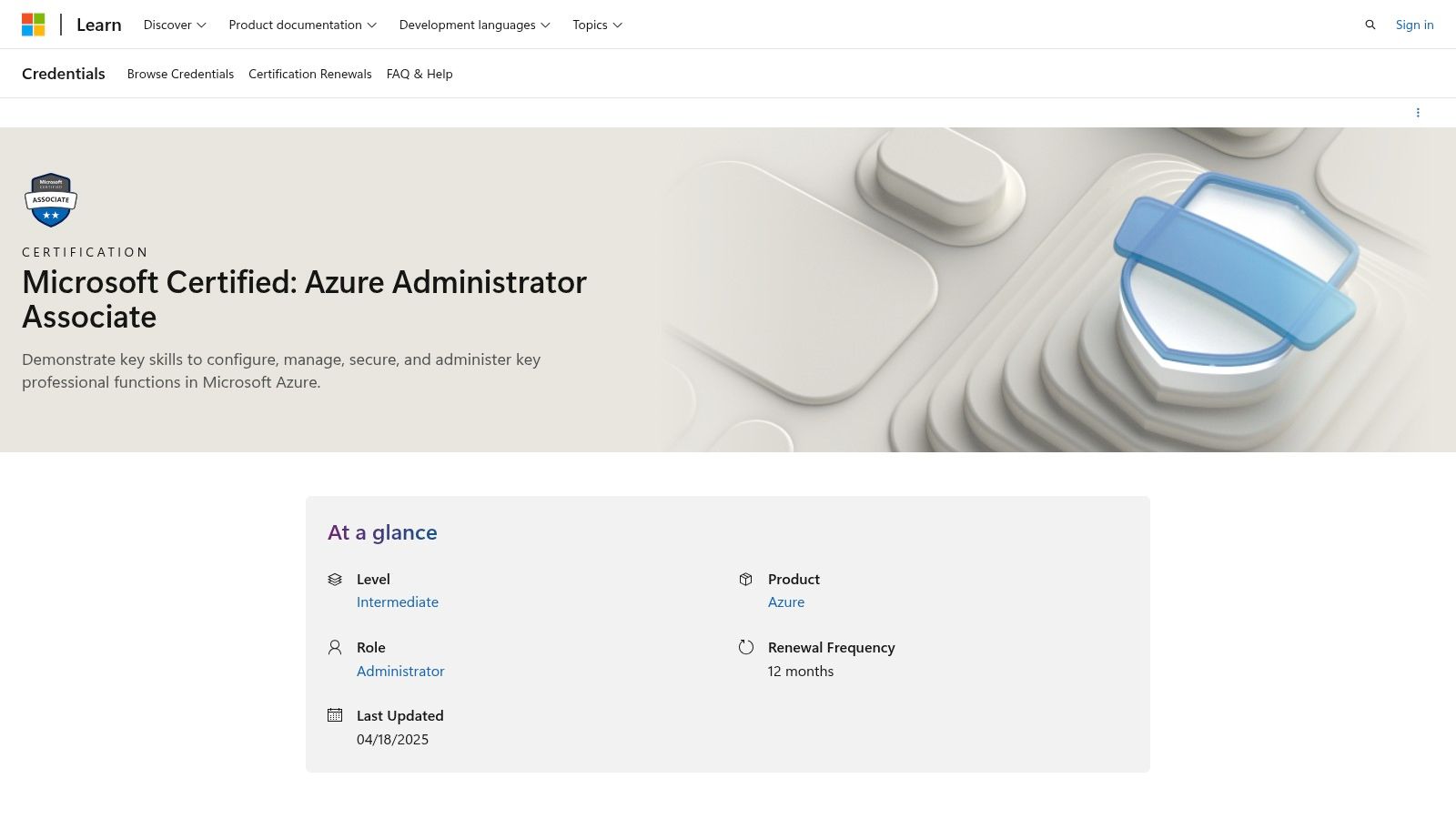
As enterprises increasingly adopt multi-cloud strategies, Microsoft Azure has become a dominant force, making its certifications incredibly valuable. The Microsoft Certified: Azure Administrator Associate (AZ-104) is a cornerstone credential, validating your expertise in implementing, managing, and monitoring an organization's Microsoft Azure environment. It's a leading candidate for the cloud computing best certification because it focuses on the practical, day-to-day skills needed to keep an enterprise cloud infrastructure running smoothly and securely.
This certification goes beyond theoretical knowledge, demanding hands-on proficiency in core Azure services. It signals to employers that you can manage compute, storage, networking, and security in one of the world's most widely used cloud platforms.
Core Focus Areas and What to Expect
The AZ-104 exam is meticulously structured to cover the complete lifecycle of Azure administration. The skills measured are divided into five key functional groups:
- Manage Azure identities and governance (20-25%): This includes managing Microsoft Entra ID (formerly Azure AD) users and groups, implementing subscription-level governance, and using Azure Policy.
- Implement and manage storage (15-20%): You will be tested on configuring Azure storage accounts, managing data with Azure Storage Explorer, and implementing Azure Files and Azure Blob Storage.
- Deploy and manage Azure compute resources (20-25%): This domain focuses on deploying and configuring virtual machines (VMs), containers, and Azure App Service.
- Implement and manage virtual networking (15-20%): Expect questions on creating and configuring virtual networks, implementing network security groups (NSGs), and monitoring network connectivity.
- Monitor and maintain Azure resources (10-15%): This involves implementing backup and recovery solutions with Azure Backup and using Azure Monitor to analyze resource performance and health.
Exam Logistics and Career Impact
Microsoft recommends at least six months of hands-on experience administering Azure and a strong understanding of core Azure services, workloads, security, and governance. This practical foundation is crucial for tackling the exam's performance-based tasks and case studies. You can learn more about getting Microsoft Certified to understand the process better.
| Feature | Details |
|---|---|
| Exam Code | AZ-104 |
| Cost | $165 USD (prices vary by country and are confirmed at checkout) |
| Format | 40-60 questions, including multiple-choice, case studies, and hands-on labs |
| Duration | 120 minutes |
| Prerequisites | Recommended: 6+ months of hands-on Azure experience |
| Key Career Paths | Azure Administrator, Cloud Administrator, Systems Administrator, IT Operations Engineer |
Pro Tip: Leverage the free resources on Microsoft Learn. Unlike other platforms, Microsoft provides comprehensive learning paths with hands-on sandbox environments at no cost. Completing these modules is one of the most effective ways to gain the practical skills needed to pass the AZ-104, as the content aligns directly with the exam objectives.
Earning the Azure Administrator Associate certification demonstrates your ability to manage and secure a modern enterprise cloud environment, making you a highly sought-after professional in the IT job market.
Learn more about the Microsoft Certified: Azure Administrator Associate
3. Google Cloud Professional Cloud Architect: The Data-Driven Challenger
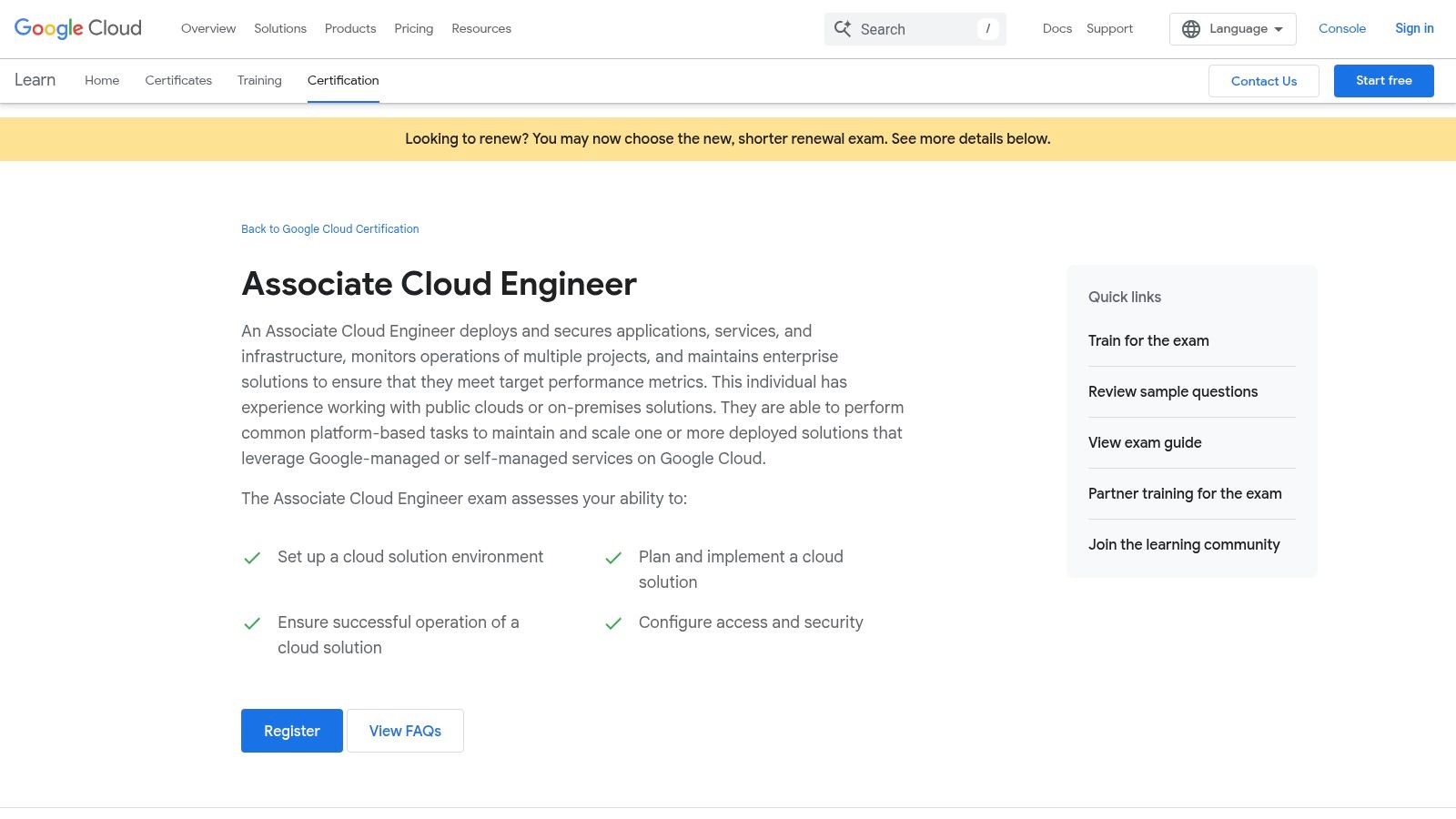
As a formidable competitor in the cloud space, Google Cloud Platform (GCP) has carved out a niche with its powerful data analytics, machine learning, and containerization services. The Google Cloud Professional Cloud Architect certification validates your expertise in designing, building, and managing robust, secure, and highly available cloud solutions using Google's best practices. It's a strong contender for the cloud computing best certification, particularly for professionals working in data-centric or AI-driven environments where GCP's strengths shine.
This professional-level certification goes beyond foundational knowledge, requiring you to apply your skills to complex, real-world case studies presented during the exam. It signals to employers that you can lead cloud initiatives and translate business objectives into technical architectures on GCP.
Core Focus Areas and What to Expect
The Professional Cloud Architect exam is designed around six primary objectives, emphasizing a holistic approach to solution design and management:
- Design and Plan a Cloud Solution Architecture (30%): This is the largest domain, focusing on designing for security, compliance, and scalability using services like Cloud Identity, VPC Service Controls, and appropriate compute options.
- Manage and Provision Solution Infrastructure (20%): You'll be tested on deploying and managing infrastructure using tools like Cloud Deployment Manager and configuring network components like VPCs, firewalls, and Cloud Interconnect.
- Design for Security and Compliance (15%): This involves implementing identity and access management (IAM), data security controls, and designing for regulatory compliance.
- Analyze and Optimize Technical and Business Processes (15%): This domain tests your ability to improve operations, reliability (SRE principles), and cost-effectiveness.
- Manage Implementation (10%): Expect questions on advising development teams and ensuring solutions are deployed successfully.
- Ensure Solution and Operations Reliability (10%): This covers monitoring, logging, and troubleshooting complex cloud environments.
Exam Logistics and Career Impact
Google recommends three or more years of industry experience, including at least one year designing and managing solutions using GCP. This experience is critical for tackling the case study-based questions that form a significant part of the exam.
| Feature | Details |
|---|---|
| Exam Code | Professional Cloud Architect |
| Cost | $200 USD (prices may vary by region) |
| Format | 50-60 multiple-choice, multiple-select questions |
| Duration | 120 minutes |
| Prerequisites | Recommended: 3+ years industry experience, 1+ year on GCP |
| Key Career Paths | Cloud Architect, Cloud Strategist, Enterprise Architect, Solutions Engineer |
Pro Tip: Unlike other exams that focus on individual services, the Google Cloud Professional Cloud Architect exam heavily features case studies (EHR, Mountkirk Games, TerramEarth). Thoroughly study and understand the business and technical requirements of these cases before your exam. Being able to map GCP services to their specific problems is essential for success.
Achieving this certification demonstrates a high level of proficiency in Google Cloud and is highly valued by organizations leveraging GCP for data analytics, machine learning, and modern application development, making you a prime candidate for senior cloud roles.
Learn more about the Google Cloud Professional Cloud Architect
4. CompTIA Cloud+: The Vendor-Neutral Foundation
While provider-specific certifications from AWS, Azure, and Google dominate the market, the CompTIA Cloud+ (CV0-003) carves out a unique and essential niche. It stands as a leading contender for the cloud computing best certification for professionals seeking a vendor-agnostic understanding of cloud principles. This certification validates your ability to deploy, manage, and secure cloud infrastructure across multiple platforms, making you a versatile asset in any multi-cloud or hybrid environment.
Unlike its vendor-specific counterparts, Cloud+ focuses on the universal concepts that underpin all cloud platforms, such as infrastructure, security, and deployment models. It proves you understand the "why" and "how" of cloud technology, not just the specifics of one provider's console.
Core Focus Areas and What to Expect
The CV0-003 exam is designed to cover the end-to-end lifecycle of cloud infrastructure management, broken down into five key domains:
- Cloud Architecture and Design (13%): This area covers planning and designing a cloud environment based on business requirements, including understanding different cloud models (IaaS, PaaS, SaaS) and connectivity options.
- Cloud Security (20%): You will be tested on implementing robust security controls, managing identity and access, and applying security best practices within a cloud environment.
- Cloud Deployment (23%): This is the largest domain, focusing on integrating cloud services, deploying virtual machines and containers, and performing migrations to the cloud.
- Cloud Operations and Support (22%): Expect questions on configuring, monitoring, and optimizing cloud environments, including patch management, automation, and performance tuning.
- Troubleshooting (22%): This domain tests your ability to diagnose and resolve a wide range of cloud-related issues, from connectivity and security problems to deployment failures.
Exam Logistics and Career Impact
CompTIA recommends 2-3 years of experience in systems administration or networking before attempting this exam. This practical background helps contextualize the broad, conceptual knowledge required to succeed. The certification also meets DoD 8570/8140 requirements, making it highly valuable for government and defense-related roles.
| Feature | Details |
|---|---|
| Exam Code | CV0-003 |
| Cost | $369 USD (prices may vary by region and with voucher bundles) |
| Format | Maximum of 90 multiple-choice and performance-based questions |
| Duration | 90 minutes |
| Prerequisites | Recommended: 2-3 years in IT; CompTIA Network+ and/or Server+ are suggested but not required. |
| Key Career Paths | Cloud Engineer, Systems Administrator, Cloud Specialist, Network Administrator, Cloud Project Manager |
Pro Tip: Don't underestimate the performance-based questions (PBQs). These simulated lab environments require you to actively solve problems, not just recall facts. Practice configuring firewalls, deploying virtual networks, and analyzing logs in a hands-on lab environment. Success on the PBQs often separates a passing score from a failing one.
Earning the CompTIA Cloud+ demonstrates a foundational, cross-platform competence that is increasingly sought after as organizations avoid vendor lock-in and adopt multi-cloud strategies, positioning you as a flexible and adaptable cloud professional.
Learn more about the CompTIA Cloud+
5. ISC2 Certified Cloud Security Professional (CCSP): The Security Specialist's Choice
While vendor-specific certifications focus on implementing security within one ecosystem, the ISC2 Certified Cloud Security Professional (CCSP) is a globally recognized, vendor-neutral credential that validates advanced technical skills in designing, managing, and securing data, applications, and infrastructure in the cloud. This certification is a strong contender for the cloud computing best certification for professionals specializing in cybersecurity. It demonstrates a deep understanding of cloud security architecture, design, operations, and service orchestration, independent of any single platform.
The CCSP is designed for experienced IT and information security leaders responsible for applying best practices to cloud security architecture. It proves you have the hands-on expertise to secure cloud environments and is highly respected by employers, especially within regulated industries like finance and healthcare.
Core Focus Areas and What to Expect
The CCSP exam is a comprehensive test covering six critical domains of cloud security. Each domain reflects the real-world responsibilities of a cloud security professional:
- Cloud Concepts, Architecture and Design (17%): Covers fundamental cloud computing concepts, design principles, and evaluating cloud service providers.
- Cloud Data Security (20%): Focuses on designing and implementing data security controls, data storage architectures, and data discovery and classification.
- Cloud Platform & Infrastructure Security (17%): Involves securing the cloud infrastructure, from compute and network to storage, and implementing business continuity and disaster recovery plans.
- Cloud Application Security (17%): Tests your knowledge of secure software development lifecycles, application security, and identity and access management solutions.
- Cloud Security Operations (16%): This domain is about building and running the physical and logical infrastructure for the cloud environment and implementing operational controls.
- Legal, Risk and Compliance (13%): Covers ethical behavior, privacy issues, and managing risk and compliance in the cloud.
Exam Logistics and Career Impact
Unlike many other certifications, the CCSP has a strict experience prerequisite, reinforcing its status as a credential for established professionals. To become certified, you must have at least five years of cumulative, paid, full-time work experience in information technology, of which three years must be in information security and one year in one of the six CCSP domains.
| Feature | Details |
|---|---|
| Exam Code | CCSP |
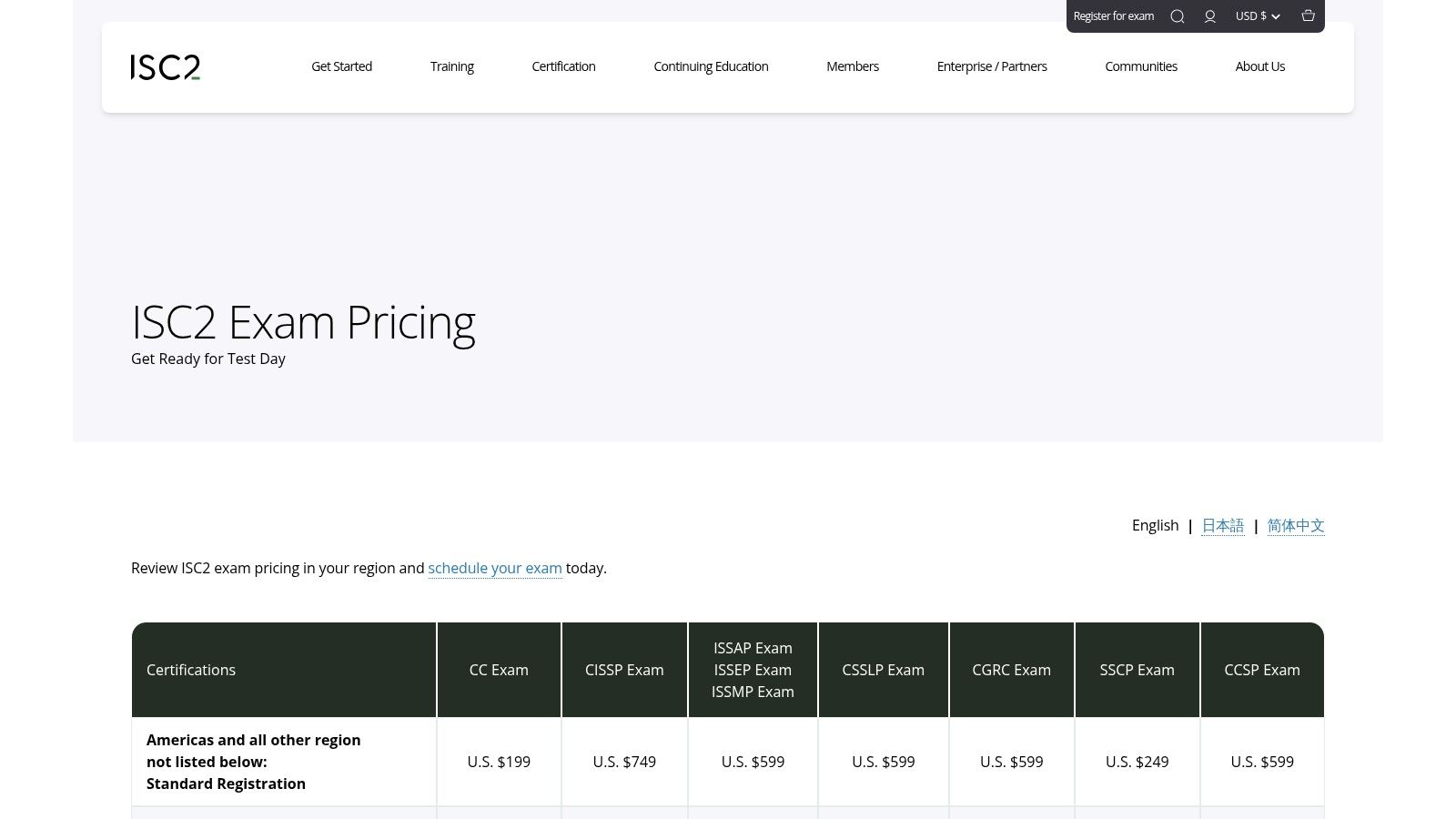
| Cost | $599 USD (prices may vary by region) |
| Format | 150 multiple-choice questions |
| Duration | 4 hours |
| Prerequisites | 5 years of IT experience (3 in infosec, 1 in a CCSP domain). Associate status available without experience. |
| Key Career Paths | Cloud Security Architect, Security Engineer, Security Administrator, Enterprise Architect, Systems Engineer |
Pro Tip: The CCSP exam is broad and deep. Do not underestimate the Legal, Risk, and Compliance domain. Many technically-focused candidates find this area challenging. Ensure you understand data privacy regulations (like GDPR), audit processes, and the nuances of contracts with cloud providers. A great way to retain this dense information is through active recall; discover how to use flashcards for studying to master these critical concepts.
Earning the CCSP signals to employers that you have the advanced knowledge and technical skills to secure a cloud environment from the ground up, making you a highly valuable asset in any organization's security posture.
Learn more about the ISC2 Certified Cloud Security Professional (CCSP)
6. Linux Foundation (CNCF): Certified Kubernetes Administrator (CKA)
In the modern cloud-native landscape, container orchestration is king, and Kubernetes is its undisputed ruler. The Certified Kubernetes Administrator (CKA) certification from the Linux Foundation and Cloud Native Computing Foundation (CNCF) is a crucial credential that proves you have the skills to manage this powerful, complex system. Unlike multiple-choice exams, the CKA is a hands-on, performance-based test, making it a true validation of practical expertise and a strong contender for the cloud computing best certification for DevOps, SRE, and cloud-native engineering roles.
Earning this certification demonstrates your ability to perform the responsibilities of a Kubernetes administrator in a live, command-line environment. This vendor-neutral credential is highly respected across all major cloud platforms, including AWS, Azure, and GCP, as Kubernetes is a foundational technology for multi-cloud and hybrid-cloud strategies.
Core Focus Areas and What to Expect
The CKA exam is entirely practical, requiring you to solve real-world problems in a command-line interface. The domains reflect the core duties of a Kubernetes administrator:
- Storage (10%): This involves managing persistent storage for applications, understanding storage classes, persistent volumes, and volume claims.
- Troubleshooting (30%): The largest domain, it tests your ability to diagnose and resolve issues with cluster components, networking, and application deployments.
- Workloads & Scheduling (15%): You will be tasked with deploying, managing, and scaling applications using Deployments, StatefulSets, DaemonSets, and Jobs, as well as managing pod scheduling.
- Cluster Architecture, Installation & Configuration (25%): This covers managing role-based access control (RBAC), upgrading clusters, and backing up and restoring etcd.
- Services & Networking (20%): Expect tasks related to cluster networking, including using Services, Ingress, and NetworkPolicies to expose applications and secure pod communication.
Exam Logistics and Career Impact
The Linux Foundation recommends strong familiarity with the command line and concepts covered in their Kubernetes Fundamentals (LFS258) course. Since the exam is hands-on, proficiency with kubectl is not just recommended; it's essential for success.
| Feature | Details |
|---|---|
| Exam Code | CKA |
| Cost | $395 USD (includes one free retake; often bundled with training for a discount) |
| Format | Performance-based lab with 15-20 command-line tasks |
| Duration | 120 minutes |
| Prerequisites | Recommended: Strong Linux command-line skills and Kubernetes fundamentals knowledge |
| Key Career Paths | Kubernetes Administrator, Cloud Engineer, DevOps Engineer, Site Reliability Engineer, Cloud Native Developer |
Pro Tip: Time management is critical. During the exam, you have access to the official Kubernetes documentation (kubernetes.io). Do not try to memorize every YAML manifest. Instead, master the use of
kubectlimperative commands (e.g.,kubectl run,kubectl create,kubectl expose) to generate basic configurations quickly, and then use the documentation to find and adapt complex YAML examples. Practice this workflow until it becomes second nature.
The CKA is a powerful signal to employers that you can step into a role and immediately manage production-grade Kubernetes clusters, making it one of the most valuable and respected certifications in the cloud-native ecosystem.
Learn more about the Certified Kubernetes Administrator (CKA)
7. Pluralsight (includes A Cloud Guru): The All-in-One Training Ground
While not a certification itself, Pluralsight has earned its spot as an indispensable resource for anyone pursuing a cloud computing best certification. Following its acquisition of A Cloud Guru, Pluralsight has become a powerhouse platform offering comprehensive training paths for virtually every major cloud credential across AWS, Azure, Google Cloud, and beyond. It serves as a one-stop-shop for preparation, combining video lessons with crucial hands-on practice.
The platform's strength lies in its structured learning paths that are meticulously aligned with certification exam objectives. These paths guide learners from foundational concepts to advanced topics, ensuring no domain is left uncovered. The integration of A Cloud Guru’s content adds a layer of highly practical, engaging instruction and hands-on labs that are famous for building real-world skills.
Core Focus Areas and What to Expect
Pluralsight's cloud training is built around a multi-faceted approach to learning, focusing on both theoretical knowledge and practical application.
- Comprehensive Video Courses: Taught by industry experts, these courses break down complex cloud services and architectural principles into digestible modules.
- Hands-on Labs and Sandboxes: This is where Pluralsight truly shines. Learners get access to live cloud environments (AWS, Azure, GCP) to apply what they've learned without incurring personal cloud costs.
- Certification Exam Preparation: The platform includes practice exams, quizzes, and targeted prep courses designed to simulate the real testing experience and identify knowledge gaps.
- Multi-Cloud and DevOps Skills: Beyond specific certifications, Pluralsight offers extensive content on essential adjacent skills like Kubernetes, Terraform, and cloud security, making it a holistic career development tool.
Platform Logistics and Career Impact
Subscribing to Pluralsight gives you access to a massive library, allowing you to prepare for multiple certifications or simply upskill in various cloud domains under a single plan. This is ideal for professionals aiming for a multi-cloud skill set.
| Feature | Details |
|---|---|
| Subscription Cost | Varies; monthly and annual plans available (e.g., Standard, Premium). A free trial is typically offered. |
| Format | On-demand video courses, hands-on labs, sandboxes, practice exams, and skill assessments. |
| Key Platforms | AWS, Microsoft Azure, Google Cloud Platform, Kubernetes, Terraform, and more. |
| Prerequisites | None; courses range from beginner to advanced levels. |
| Primary Value | Prepares candidates for official certification exams from providers like AWS, Microsoft, and Google. |
Pro Tip: Don't just follow a single learning path. Leverage the platform's breadth to your advantage. If you're studying for an Azure certification, for example, watch a few related AWS or GCP courses on a similar service. This comparative learning deepens your understanding of core cloud concepts, rather than just the implementation on one platform, making you a more versatile and knowledgeable cloud professional.
Pluralsight provides the structured curriculum and practical tools necessary to build confidence and competence, directly translating study efforts into exam success and enhanced job-readiness.
Learn more about Pluralsight's Cloud Training
Top 7 Cloud Certification Comparison
| Certification / Platform | Implementation Complexity 🔄 | Resource Requirements ⚡ | Expected Outcomes 📊 | Ideal Use Cases 💡 | Key Advantages ⭐ |
|---|---|---|---|---|---|
| AWS Training and Certification (Amazon Web Services) | Moderate – broad catalog, structured ladder | Paid premium content, exam fees | Strong U.S. employer recognition, career growth | Cloud roles in AWS-heavy environments | Comprehensive pathways, frequent discounts |
| Microsoft Learn: Certifications (Azure) | Moderate – clear role levels, some scheduling issues | Mostly free learning content; exam fees vary | Broad Azure recognition, practical sandbox skills | Azure-focused cloud roles, enterprises | Extensive free content, sandbox environments |
| Google Cloud: Certifications | Moderate – platform-specific focus | Transparent pricing; online and onsite exams | Recognition in data/AI roles, platform expertise | Data/AI and Google Cloud-centric roles | Clear policies, role-based exam details |
| CompTIA Cloud+ (Vendor-neutral) | Moderate – broad coverage | Exam fees plus training costs | Baseline multi-cloud skills, vendor neutral | Multi-cloud baseline knowledge, DoD compliance | Vendor-neutral, CEU renewal program |
| ISC2: CCSP (Certified Cloud Security Professional) | Higher – requires experience, security focus | Higher exam fees, official training available | Strong recognition in regulated industries | Cloud security roles requiring professional experience | Recognized in security, transparent policies |
| Linux Foundation (CNCF): Certified Kubernetes Administrator (CKA) | High – hands-on command-line exam | Exam purchase; optional training bundles | Practical cloud-native/container skills | Kubernetes and cloud-native infrastructure | Highly practical, cost-saving bundles |
| Pluralsight (includes A Cloud Guru content) | Low – training platform only | Subscription fees; exams separate | Improved practical skills, exam preparation | Multi-cloud skills development and practice | Wide multi-cloud training, hands-on labs |
Your Next Step: Choosing and Conquering Your Certification
Navigating the landscape of cloud certifications can feel overwhelming, but making an informed choice is a powerful first step toward career advancement. We've explored the dominant platforms from AWS, Microsoft Azure, and Google Cloud, each offering a tiered path from foundational knowledge to specialized professional expertise. We also delved into crucial vendor-neutral and specialized certifications like CompTIA Cloud+, ISC2 CCSP, and the CNCF’s CKA, which provide either a broad, multi-cloud perspective or deep, specific skill validation.
The central takeaway is this: the "cloud computing best certification" is not a one-size-fits-all award. It is a credential that must be strategically aligned with your unique career trajectory, existing skill set, and the specific demands of your target industry or role. Your decision-making process should be a personal audit of your professional goals.
Synthesizing Your Options: From Decision to Action
To move forward, distill the information from this guide into a concrete action plan. Don't just pick a certification; build a strategy around it.
- For Cloud Newcomers: If you are just starting, a foundational certificate like AWS Certified Cloud Practitioner or Azure Fundamentals (AZ-900) is an excellent, low-risk entry point. It builds confidence and provides the vocabulary needed for more advanced roles.
- For Aspiring Architects: Professionals aiming for design and architecture roles should target the AWS Certified Solutions Architect – Associate or its equivalent in Azure (AZ-305) or Google Cloud (Professional Cloud Architect). These are highly respected credentials that validate your ability to design robust, scalable, and cost-effective cloud solutions.
- For Developers and Engineers: If your daily work involves coding and deploying applications, a developer-centric certification like the Azure Developer Associate (AZ-204) or AWS Certified Developer – Associate is a direct investment in your core responsibilities. Similarly, the Certified Kubernetes Administrator (CKA) is a must-have for anyone deep in the containerization and orchestration ecosystem.
- For Security Specialists: Cybersecurity professionals should prioritize the ISC2 CCSP. This certification is a gold standard, proving your expertise in securing cloud environments-a skill that is in exceptionally high demand.
Creating Your Personalized Roadmap
Once you've identified the right path, the journey of preparation begins. Success is not just about passing an exam; it's about genuinely mastering the material.
- Define Your Timeline: Set a realistic exam date. A goal without a deadline is just a wish. A 3-6 month window is often effective for associate-level certifications, allowing for deep learning without burnout.
- Blend Theory with Practice: Do not rely solely on video courses or reading materials. The most effective learning happens when you apply concepts in a real environment. Use the free tiers offered by AWS, Azure, and GCP to build projects, break things, and fix them. This hands-on experience is non-negotiable for exam success.
- Identify Your Weaknesses: As you study, take practice exams early and often. Don't focus on the score initially. Instead, use the results to identify your knowledge gaps. If you consistently struggle with networking or security questions, dedicate extra study sessions to those domains.
Key Insight: The true value of a certification isn't the digital badge itself, but the structured learning journey it enforces. It compels you to master a broad range of services and best practices, transforming you into a more competent and confident cloud professional.
Embarking on this path is a significant commitment, but the rewards are equally substantial. The right cloud certification serves as undeniable proof of your skills, enhances your credibility with employers, and unlocks opportunities for more challenging and lucrative roles. Use this guide as your launchpad, choose the certification that ignites your passion, and commit to the process. Your future in the cloud is waiting.
If your path leads to becoming a cloud developer on the Microsoft stack, achieving the AZ-204 certification is a critical milestone. To accelerate your preparation with a proven, efficient system, consider AZ-204 Fast, a study tool designed for busy professionals who need to learn effectively. Explore the method and get started on your Azure developer journey today at AZ-204 Fast.
Leave a Reply