Category: Uncategorised

  • Unlock Your Brain How to Improve Memory Retention

    Unlock Your Brain How to Improve Memory Retention

    It's a frustratingly common experience: you spend hours studying something new, only to find it's vanished from your memory just a few days later. If this sounds familiar, you're not alone. The problem isn't a lack of effort—it’s that most of us were taught to study the wrong way.

    The real breakthrough in making knowledge stick isn't about studying harder. It’s about studying smarter, and that starts by swapping passive review for two powerful, evidence-based principles: spaced repetition and active recall.

    The Real Secret to Remembering What You Learn

    Ever pulled an all-nighter to cram for a test, passed it, and then couldn't recall a single thing a week later? You’ve just run headfirst into the "forgetting curve." It’s a natural human tendency that shows just how ineffective traditional study habits can be.

    Simply re-reading your notes, highlighting passages, or re-watching a lecture are surprisingly passive activities. They trick you into feeling productive, but they don't send a strong enough signal to your brain that this information is important and needs to be stored for the long haul.

    The secret to building durable memories is to make your brain work for it. You have to actively engage with the material, which creates stronger, more reliable neural pathways. This effort is what makes the information easy to pull up when you need it later.

    Why Active Learning Wins Every Time

    Active learning techniques are all about getting your hands dirty. They force you to interact with the material, explain it in your own words, and test yourself on it. It’s a world away from just letting information wash over you.

    Think about how quickly we forget things. Studies on adult learning reveal a shocking reality: we lose about 50% of new information within just one hour. If we don't do anything to reinforce it, that number climbs to 90% within a week.

    But here’s the good news. The same research shows that hands-on, active practice can flip those numbers on their head, boosting retention rates to an incredible 90%. You can dig into the data yourself and see the full learning retention statistics at BeardedSkeptic.com. That kind of difference makes it clear that a change in strategy is non-negotiable for effective learning.

    A Clear Comparison: Active vs. Passive Methods

    Seeing the methods laid out side-by-side really drives home just how massive the gap is between active and passive approaches.

    The most powerful learning happens when you force your brain to retrieve information, not when you simply present it again. This struggle is what builds strong, durable memories.

    This table breaks down the average retention rates for common learning techniques. You'll notice a clear pattern: the more you engage your brain, the more you remember.

    Learning Method Effectiveness for Memory Retention

    Here’s a look at how different learning activities stack up when it comes to long-term memory. The numbers speak for themselves.

    Learning Method Type Average Retention Rate
    Lecture Passive 5%
    Reading Passive 10%
    Audio-Visual Passive 20%
    Demonstration Passive 30%
    Group Discussion Active 50%
    Practice by Doing Active 75%
    Teaching Others Active 90%

    The data is undeniable. If you genuinely want to remember what you learn, your time is better spent on active participation.

    This means spending less time passively reviewing and more time actively doing. Try incorporating these habits into your routine:

    • Practice retrieval: Close your book and try to recall key concepts from scratch.
    • Discuss what you've learned: Explain a new idea to a friend or colleague. You'll quickly find out what you don't understand.
    • Apply your knowledge: Use the information to solve a real problem or complete a relevant task.

    Putting Spaced Repetition and Active Recall Into Practice

    Image

    It’s one thing to understand the theory behind spaced repetition and active recall, but it's another thing entirely to weave them into your daily life. Let's get practical and look at how these principles become real-world habits that can seriously upgrade your ability to remember things. This isn't about studying harder; it’s about studying smarter.

    The secret is to work with your brain's wiring, not against it. Think about it: every time you successfully pull a memory out of your head, you're doing more than just remembering. You're actually making that memory stronger and easier to find next time.

    This process is what experts call memory reconsolidation. The simple act of remembering makes the memory "pliable" again, giving your brain a chance to reinforce the neural pathways connected to it. This is why active learning often feels so much harder than just re-reading your notes. That feeling of effort is the sign that you're building real, lasting knowledge.

    Implementing Spaced Repetition

    Spaced repetition is your best defense against the natural tendency to forget. Instead of cramming, you intentionally review information at increasing intervals—maybe after one day, then three days, then a week, and so on. This rhythm signals to your brain that this information is important and worth holding onto.

    You can get started in a couple of ways:

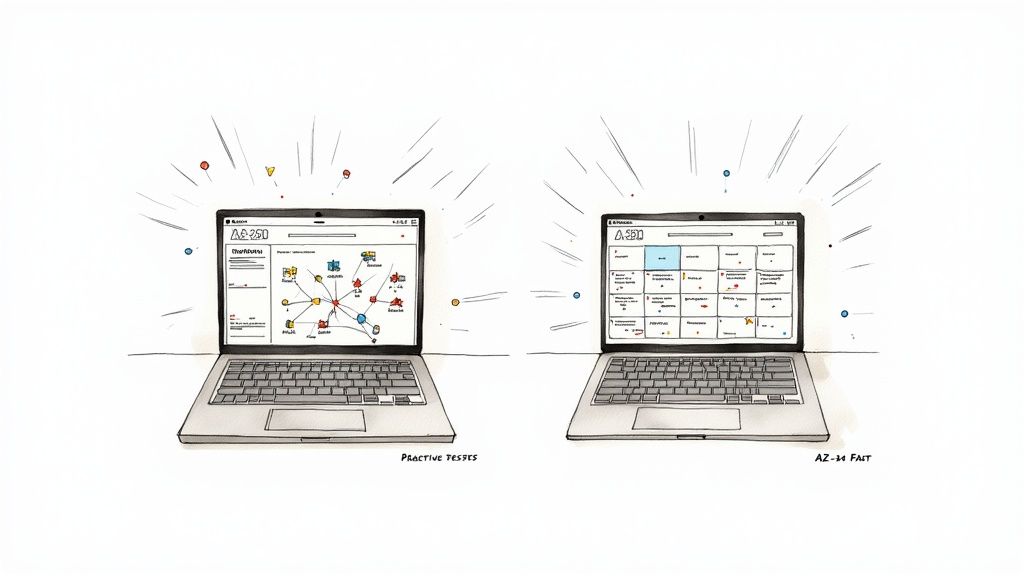
    • The High-Tech Route: Using a Spaced Repetition System (SRS) like Anki or a dedicated learning platform like our own AZ-204 Fast is the most efficient method. These tools handle all the scheduling for you. You create digital flashcards, and an algorithm figures out the perfect moment to show you each card based on how well you know it. It’s perfect for tackling huge amounts of information, like studying for a professional exam.

    • The Low-Tech Route: The Leitner system is a classic for a reason. All you need are physical flashcards and a few boxes. When you get a card right, it moves to a box you review less often. Get it wrong, and it stays in the daily review box. It's a manual but surprisingly effective way to space out your practice.

    My Key Takeaway: Spaced repetition tells you when to study, but active recall is how you should study. The two are a powerful combination. The spacing provides the timing, but the act of recalling is the mental workout that actually builds the memory.

    What’s happening in the brain is fascinating. When you intentionally retrieve a memory, you trigger a process called retrieval-induced reconsolidation. Studies have shown that even brief, repeated reactivations of a memory right after you learn it can make it significantly more durable. If you want to dive deeper, there's some great research on the neuroscience behind memory reconsolidation that explains why this works so well.

    Mastering Active Recall Techniques

    Active recall is all about pulling information out of your brain, not just passively shoving it in. Simple flashcards are a great start, but there are even more powerful ways to put this into practice.

    The Feynman Technique

    This is one of my favorite methods because it's so simple yet so revealing. It forces you to find the holes in your knowledge.

    1. Pick Your Topic: Choose any concept you want to understand deeply.
    2. Teach It to a Novice: Try to explain it in the simplest terms you can, as if you were talking to a complete beginner (or even a child). Do it out loud or write it down.
    3. Find the Gaps: Pay attention to where you hesitate, get stuck, or have to use complicated jargon. Those are your knowledge gaps. Now, go back to your source material to fill them.
    4. Simplify and Refine: Go back to your explanation and make it even simpler. Use analogies and straightforward language until it’s perfectly clear and easy to follow.

    This technique is so effective because it makes it impossible to hide from what you don't truly understand.

    Summarization and Self-Explanation

    This is another great habit to build. After you finish a chapter, a lesson, or a video, put everything away.

    With a blank piece of paper or a new document, write down a summary of the key ideas from memory. Don't worry about making it perfect; the goal is to force your brain to reconstruct the information from scratch.

    Once you’re done, grab your source material and compare. What did you get right? What did you forget? More importantly, what did you misremember? This process of self-correction is an incredibly powerful learning tool that beats passive re-reading every single time.

    Building a Brain-Friendly Lifestyle
    Image

    Powerful techniques like spaced repetition and active recall are incredible tools for how you learn, but they're only half the story. Your brain's raw ability to form and keep memories is tied directly to your daily habits. Think of your mind as a high-performance engine—it doesn't matter how well you drive if you're using the wrong fuel and skipping maintenance.

    Crafting a brain-friendly lifestyle isn't about some drastic, overnight transformation. It’s about making small, consistent investments in your health that pay off with huge cognitive dividends. The basics—sleep, diet, and exercise—directly impact how well your brain can encode and consolidate everything you're working so hard to learn.

    The Non-Negotiable Role of Sleep

    Sleep isn't just downtime; it’s an active, critical process for your brain. This is when memory consolidation happens—the fascinating biological process of turning fragile, short-term memories into stable, long-term knowledge. Skimping on sleep is like asking a librarian to file a mountain of new books with the lights off. It’s just not going to work.

    As you cycle through different sleep stages, your brain gets busy. Deep sleep, for example, is vital for cementing facts and what we call declarative memories, like a key historical date for an exam. Then you have REM sleep, which seems to play a huge role in procedural memory—like mastering the steps to solve a complex math problem.

    Even a single night of poor sleep can noticeably tank your ability to focus and learn new things the next day. Chronic sleep deprivation is even worse, making it a struggle to encode new information and recall what you’ve already stored.

    To get your sleep hygiene on track, try a few simple tweaks:

    • Stick to a schedule: Go to bed and wake up around the same time every day, weekends included. This is the single best way to regulate your body's internal clock.
    • Power down screens: The blue light from your phone and laptop can mess with melatonin, the hormone that tells your body it's time to sleep.
    • Watch the late-night culprits: Caffeine and alcohol can seriously disrupt your natural sleep cycles and tank the quality of your rest.

    Fueling Your Brain with the Right Nutrition

    The food you eat has a direct and measurable impact on your brain's structure and function. I've seen it time and again: a diet packed with brain-boosting nutrients can protect against cognitive decline and support the very neural pathways you need for learning.

    Your brain is a hungry organ. It demands a steady supply of specific nutrients to run smoothly. Omega-3 fatty acids, which you find in fatty fish like salmon or in walnuts, are literal building blocks for your brain cells. Antioxidants, which are abundant in berries and dark leafy greens, act like a security detail, protecting your brain from cellular damage.

    Here are a few brain-friendly foods I always recommend adding to the shopping list:

    • Fatty Fish: Salmon, trout, and sardines are loaded with omega-3s.
    • Blueberries: People call them "brainberries" for a reason—they're bursting with antioxidants.
    • Nuts and Seeds: Walnuts and flaxseeds are fantastic plant-based sources of omega-3s.
    • Dark Chocolate: A little bit goes a long way. It contains flavonoids, caffeine, and antioxidants that can give your brain a nice boost.

    On the flip side, diets high in refined sugars and saturated fats can slam the brakes on your memory. Studies have shown that high sugar intake can lead to poorer memory and reduced brain volume, especially in the hippocampus—a region absolutely essential for short-term memory.

    The Cognitive Power of Physical Exercise

    Getting your body moving is one of the most effective things you can do for your brain. It's not just about physical fitness; regular exercise has a profound and positive effect on memory and thinking skills.

    When you exercise, you increase blood flow to the brain, which means more oxygen and more nutrients where they're needed most. Even more impressive, aerobic exercise has been shown to increase the size of the hippocampus, the part of your brain that handles verbal memory and learning.

    You don’t need to train for a marathon to get these benefits. A brisk 20-minute walk each day can make a real difference.

    Consistency is what matters most. By weaving these small, manageable habits into your life, you're creating the ideal environment for your brain to not only learn new information but to hold onto it for good.

    Going Beyond Flashcards: Advanced Memory Techniques
    Image

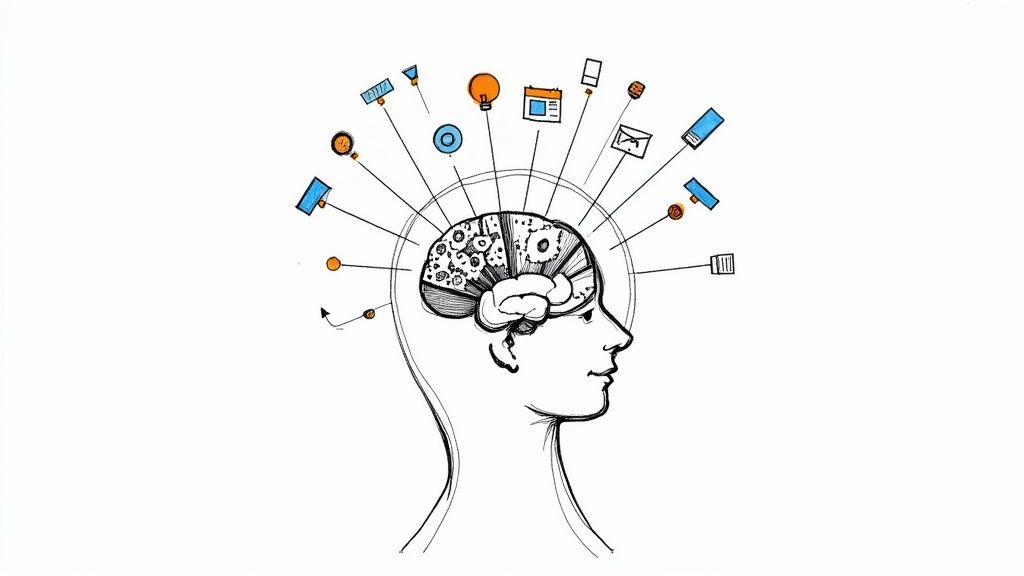
    When you've pushed flashcards and rereading as far as they can go, it’s time to bring out the heavy-hitters. This is where advanced memory techniques, often called mnemonics, come into play. These aren't just clever tricks; they are structured systems for encoding complex information into a format your brain is built to remember.

    Think of it this way: these techniques transform dry, abstract facts into vivid mental pictures, wild stories, or even spatial journeys. You're tapping directly into your brain's natural talent for recalling images and narratives, creating a solid mental scaffold to store and retrieve almost anything you want.

    Build Your First Memory Palace

    One of the oldest and most powerful mnemonic devices is the Memory Palace, also known as the method of loci. This isn't just for memory champions on TV; it’s a practical tool anyone can use. The idea is to visualize a place you know intimately—like your own home—and "place" the things you need to remember along a specific path.

    Our brains are exceptionally good at spatial memory. This method simply hijacks that built-in skill.

    Let's try it right now. The goal: memorize the first five U.S. presidents in order: Washington, Adams, Jefferson, Madison, and Monroe.

    • Step 1: Choose Your Palace. Picture your home. Decide on a logical route you always take, maybe starting from your front door and walking to the living room.
    • Step 2: Place Your Items. Now, let's create some unforgettable images at each "locus" or spot along your path.
      • Front Door: Imagine a giant washing machine (Washington) furiously scrubbing your doormat. Hear the sloshing, see the soap suds flying everywhere.
      • Entryway: As you step inside, you trip over a single, massive atom (Adams) with electrons buzzing loudly around it, completely blocking the hall.
      • Living Room: Look over to your coffee table, where your chef friend (Jefferson) is frantically trying to cook a five-course meal on it. The more absurd, the better.
      • Sofa: A very sad maid (Madison) is sitting on your sofa, dusting a single cushion with a tiny feather duster.
      • TV: On top of the television, a tiny lawnmower (Monroe) has sputtered to life and is cutting the dust off the screen.

    To recall the list, you just take a mental stroll through your house. The washing machine, the atom, the chef… the sequence is effortlessly baked into the journey. This is a game-changer for ordered lists, key points in a speech, or exam concepts.

    Break Down Information with Chunking

    Your brain’s working memory is powerful, but it has a bottleneck. Most people can only hold about seven pieces of new information at once. That's not a lot. The technique of chunking is a beautifully simple way to get around this limit by grouping individual items into larger, meaningful clusters.

    You actually do this all the time without thinking about it. A phone number isn't 5-5-5-1-2-3-4-5-6-7. It’s (555) 123-4567. By grouping ten random digits into three manageable chunks, you make them infinitely easier to remember.

    Key Insight: Chunking dramatically reduces the cognitive load on your brain. By finding patterns and creating logical groups, you make complex information far simpler to process and recall.

    This applies to so much more than numbers. When studying for a tough certification like the Microsoft Azure Developer Associate (AZ-204), don't just stare at a long command line. Break it into its component parts: the core command, the resource group name, the name flag, the location. Each piece becomes a logical chunk, making the whole thing stick.

    Link Unrelated Ideas with Vivid Stories

    Another fantastic method is to weave a short, memorable story around a list of unrelated items. Our brains are hardwired for narrative. A story provides context and a natural flow, making a sequence of items stick far better than rote memorization ever could.

    Let's say your grocery list is:

    • Batteries
    • Bread
    • Milk
    • Apples

    Instead of repeating the words, paint a mental picture. A giant battery is bouncing down the street, using a huge loaf of bread as a trampoline. It bounces so high it lands with a splash in a river of milk, where thousands of bright red apples are bobbing along.

    The more ridiculous and sensory the story, the more firmly it will be anchored in your memory. This is perfect for shopping lists, talking points, or any collection of items where the exact order isn't critical. By giving random data a narrative purpose, you're giving your brain the hooks it needs to pull that information back out when you need it.

    How Your Environment Shapes Your Memory

    We put so much emphasis on how we study, but we often forget that where we study can be just as crucial. Your physical surroundings and even your internal mood have a huge, often unnoticed, impact on how well you can remember things later.

    This happens because our brains don't just file away facts like a computer. Instead, they weave a rich tapestry of associations, connecting what we learn to the context where we learned it.

    This whole idea is called context-dependent memory. Ever walk into a room and suddenly remember exactly what you were looking for? That’s it in action. The sights, sounds, and even the subtle smell of that room were acting as retrieval cues, pulling that specific memory to the surface.

    Practically speaking, this means you can get a real recall advantage by studying in a place that feels like your testing environment. If you know your final exam will be in a dead-silent auditorium, hitting the books in a quiet library makes more sense than trying to focus in a bustling coffee shop. Your brain forges a link between the information and the silence, making it easier to access when you're back in that quiet setting.

    The Surprising Power of Changing Scenery

    While matching your test environment is a solid tactic, there’s another strategy that seems to fly in the face of that advice: intentionally varying your study locations.

    Instead of getting locked into one spot at your desk, try mixing it up. Spend some time with your notes in a different room, at a local park, or in a new corner of the library. It might feel a little strange at first, but there's a good reason for it.

    When you learn the same material in multiple places, you force your brain to build stronger, more flexible pathways to that memory. It's no longer tethered to just one set of environmental cues. This process makes the information far more durable and easier to retrieve no matter where you are.

    A key part of how to improve memory retention involves making your brain work a little harder during the encoding phase. By changing your environment, you create richer, more diverse neural connections to the same piece of information.

    This isn't just a study hack; it's backed by broader observations about how our environment shapes our minds. An international study, for instance, found that things like education level and socioeconomic background impact memory performance across different countries. This points to the profound influence our life's context has on our cognitive abilities. You can dig into the research on how external factors affect memory to see just how deep these connections run.

    Your Internal "Weather" Matters, Too

    Just as your physical location leaves its mark, so does your internal environment. Psychologists call this state-dependent memory. Put simply, your emotional and physiological state gets bundled up with the information you’re learning.

    For example, if you always study after your morning coffee, feeling calm and alert, that caffeinated focus can become a powerful memory trigger. Trying to recall that same information when you're exhausted and stressed is much tougher because your brain is missing the internal "state" it associates with the memory.

    This has some real-world implications for how you should approach learning:

    • Manage Your Emotions: Studying when you're incredibly anxious or stressed is like trying to write on a shaky table. The information might get linked to that negative feeling, making it harder to recall when you’re calm.
    • Keep Your Body in Mind: Being hungry, tired, or even just slouched over in your chair can influence your memory. Aim for a consistent physiological state when you sit down for a focused session.
    • Watch Out for Mood Bias: We tend to remember things that match our current mood. It’s why recalling happy memories feels almost impossible when you’re feeling down. Be aware of this when you study.

    Taming Distractions and Background Noise

    Finally, let's talk about the immediate environment and distractions. While some people swear by their study playlists, the science here is a bit mixed. For complex material that requires deep, logical thinking, silence is almost always better. Your brain has to spend precious energy filtering out the music, leaving fewer cognitive resources for actual learning.

    However, for more repetitive or mundane tasks, some light background noise—like instrumental music or ambient sounds—can sometimes help. It can mask more jarring, unpredictable noises and help you settle into a rhythm. The key is to be intentional about it.

    Ultimately, to really improve your memory retention, you need to become the architect of your learning environment. By thoughtfully managing your location, your internal state, and the sounds around you, you set the stage for knowledge to stick—and for you to recall it successfully when it truly counts.

    Your Blueprint for Better Memory Retention

    Alright, let's get down to business. We've talked about some powerful ideas—active recall, mnemonics, lifestyle tweaks—but theory is useless without a solid plan. It's time to connect the dots and build a routine that actually works.

    Think about a real-world challenge. Let's say you're a developer aiming for the AZ-204 Azure Developer certification. That's a mountain of dense, technical information you need to not only memorize for an exam but actually understand for your job. Just winging it won't cut it. You need a system.

    This is where you'll weave everything together: spaced repetition to combat the forgetting curve, active recall to strengthen your neural pathways, and focused work sessions to absorb new material. You'll even schedule time for the things that support your brain, like a quick walk or a good night's sleep.

    Creating a Realistic Weekly Schedule

    The secret to building a strong memory isn't cramming; it's consistency. A little bit of focused effort every day is far more powerful than a frantic, eight-hour marathon on a Sunday. You want to create a rhythm where learning and consolidation work together.

    Let’s map out what a smart, balanced week could look like for our aspiring Azure developer. This isn't about filling every minute, but making the minutes you do spend count.

    Sample Weekly Memory Retention Schedule

    Here’s a practical template you can adapt. It integrates different techniques throughout the week to maximize both learning and retention.

    Day Morning (30 mins) Afternoon (60 mins) Evening (20 mins)
    Mon Active Recall: Review weekend concepts from memory. Deep Work: Learn a new module (e.g., Azure Storage). Build Flashcards: Create cards for today's new concepts.
    Tue Spaced Repetition: Drill flashcards (Anki/Leitner). Practice Lab: Apply new knowledge in a hands-on lab. Light Exercise: 20-minute brisk walk.
    Wed Active Recall: Feynman Technique on a tricky topic. Deep Work: Learn a new module (e.g., Azure Security). Build Flashcards: Create cards for the new security topics.
    Thu Spaced Repetition: Drill flashcards. Practice Exam: Do a timed practice test section. Light Exercise: 20-minute brisk walk.
    Fri Active Recall: Summarize the week's learning from memory. Review & Consolidate: Go over weak areas from the practice exam. Plan Weekend: Schedule light review and downtime.
    Sat Spaced Repetition: Full flashcard review session. Rest & Relax: Allow brain time for passive consolidation. Light Exercise: Longer walk or recreational activity.
    Sun Review Weak Topics: Briefly revisit the toughest concepts. Plan the Week Ahead: Set goals for the upcoming week. Rest: Prepare for the week ahead.

    Notice the pattern? Mornings are for pulling information out of your brain. Afternoons are for putting new information in. Evenings are for consolidation and well-being. And yes, rest is explicitly scheduled—it’s just as vital as any study block.

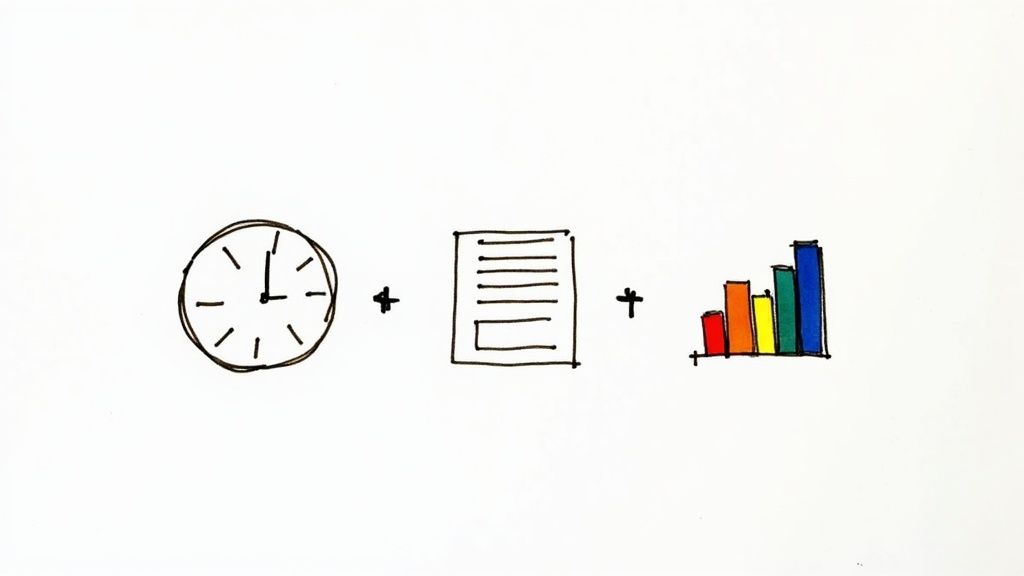
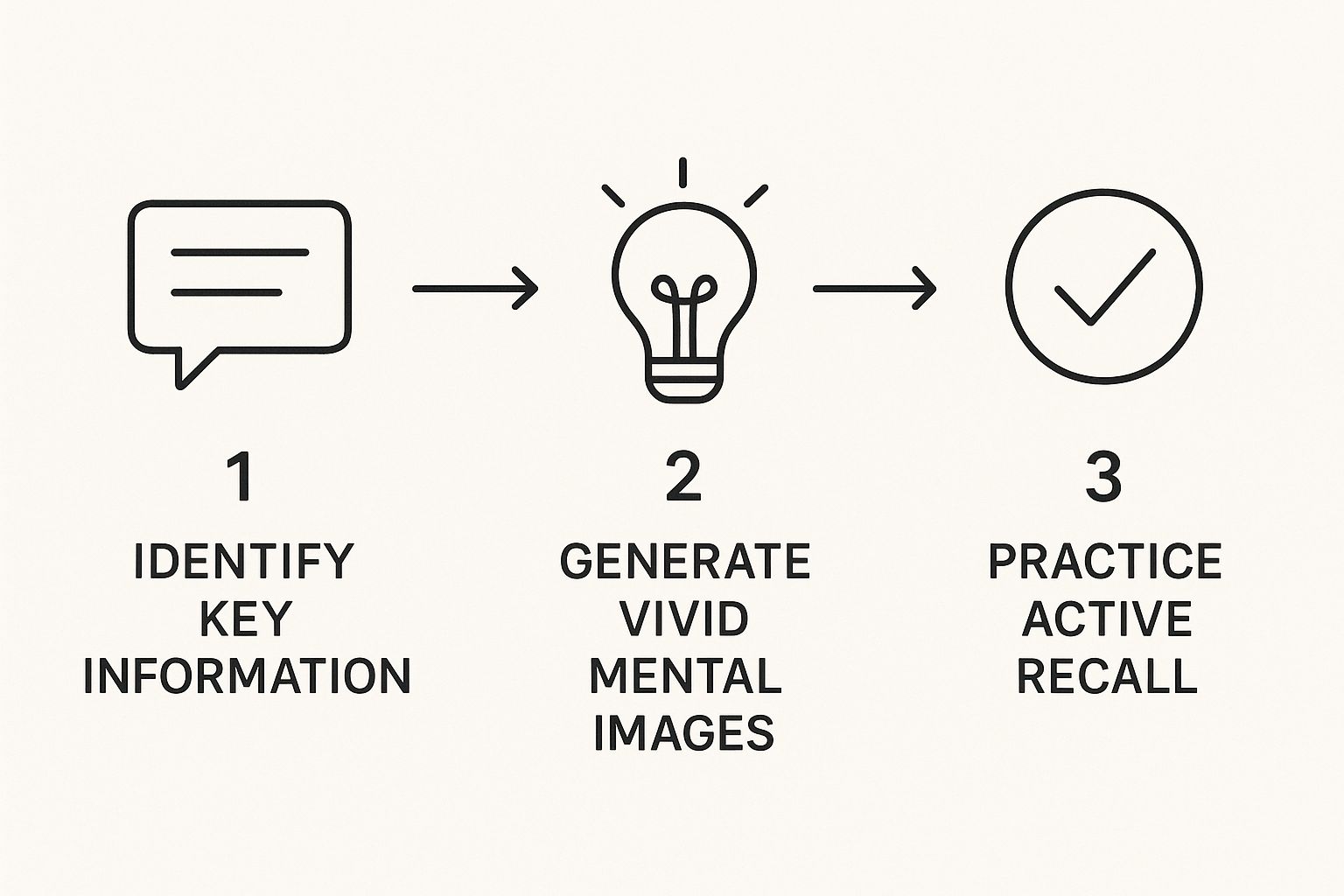
    The core mental loop you're creating during your study sessions is beautifully simple.
    Image

    You identify the key information, create a vivid hook to make it memorable, and then constantly test yourself on it. That’s the engine of effective learning.

    Troubleshooting Common Learning Hurdles

    Even the best-laid plans hit snags. The real skill is knowing how to course-correct when you get stuck.

    Key Insight: Learning isn't a straight line. Hitting a plateau doesn't mean you've failed—it's a signal to change your attack.

    Here’s a field guide for the most common challenges I see people face:

    • You've Hit a Learning Plateau. You’re putting in the hours, but the needle isn’t moving. This usually means your brain has adapted to your current method and needs a new challenge.

      • The Fix: Shake things up. If you've been living on flashcards, try explaining a tough concept to a rubber duck (the Feynman Technique). If you've been reading, try creating a mind map from pure memory. A fresh angle is often all it takes to break through.
    • You Feel Unmotivated or Burnt Out. The initial excitement is gone, and studying feels like a total slog.

      • The Fix: First, reconnect with your "why." Why are you doing this? Picture the career boost, the project you'll lead. Second, check your foundations. Are you sleeping enough? Getting some fresh air? Burnout is often just physical and mental exhaustion in disguise.
    • The Material Isn't Sticking. Some topics are just painfully dry, abstract, or ridiculously complex.

      • The Fix: This is primetime for advanced mnemonics. Don't be afraid to get weird. Create a bizarre story that links a series of abstract function names. Build an elaborate Memory Palace in your childhood home to store a sequence of steps. The more vivid and absurd the mental image, the stronger it will stick.
    • You Keep Forgetting the "Easy Stuff." It's infuriating. You can explain a complex architecture, but you keep blanking on a basic definition.

      • The Fix: This is a classic sign your spaced repetition intervals are too long for that specific piece of information. Go into your Anki deck and manually mark that "easy" card for more frequent reviews. If you're using a physical Leitner system, just move the card back to the first box. No shame in it.

    Making this a sustainable practice is the final piece of the puzzle. By building a smart schedule and learning to adapt when things get tough, you create a reliable system for learning anything.


    If you're gearing up for the AZ-204 exam, you don’t have to piece this all together yourself. At AZ-204 Fast, we've already built these evidence-based techniques—from spaced repetition flashcards to full-length practice exams—into a single, focused platform. We give you the structure and the tools so you can focus on learning effectively and walking into your exam with confidence.

    See how we can help accelerate your certification journey at https://az204fast.com.

    Article created using Outrank

  • How to Overcome Exam Anxiety: Proven Strategies to Succeed

    How to Overcome Exam Anxiety: Proven Strategies to Succeed

    Tackling exam anxiety isn't about finding a single magic bullet. It's a combination of smart preparation, shifting how you think about the test, and knowing what to do when that familiar wave of panic starts to rise. It all begins with a crucial realization: you can manage this. The goal is to move from a place of fearing failure to one of confidence built on solid, practical groundwork.

    Understanding What Exam Anxiety Really Is

    Let's get one thing straight—a little flutter of nerves before a big test is totally normal. In fact, it can even give you a bit of an edge and sharpen your focus. But real, debilitating exam anxiety is a different beast entirely. It's that overwhelming sense of dread, the heart-pounding panic, and the flood of "what if I fail?" thoughts that can completely derail you, no matter how many hours you've put into studying.

    This isn't just about "being nervous." It's a specific kind of performance anxiety where the pressure feels so immense that your mind and body go into fight-or-flight mode. Maybe you've experienced it: you sit down to review your notes, and your brain just won't absorb anything. Or worse, you walk into the exam room, and all the information you knew cold just hours before vanishes into thin air.

    The Real-World Impact of Exam Stress

    If this sounds familiar, you're far from alone. Exam anxiety is a massive issue for students everywhere, fueled by ever-increasing academic pressure. The GoStudent Future of Education Report highlighted just how serious this has become, linking exam stress directly to burnout and other mental health challenges that impact both a student's well-being and their final grades.

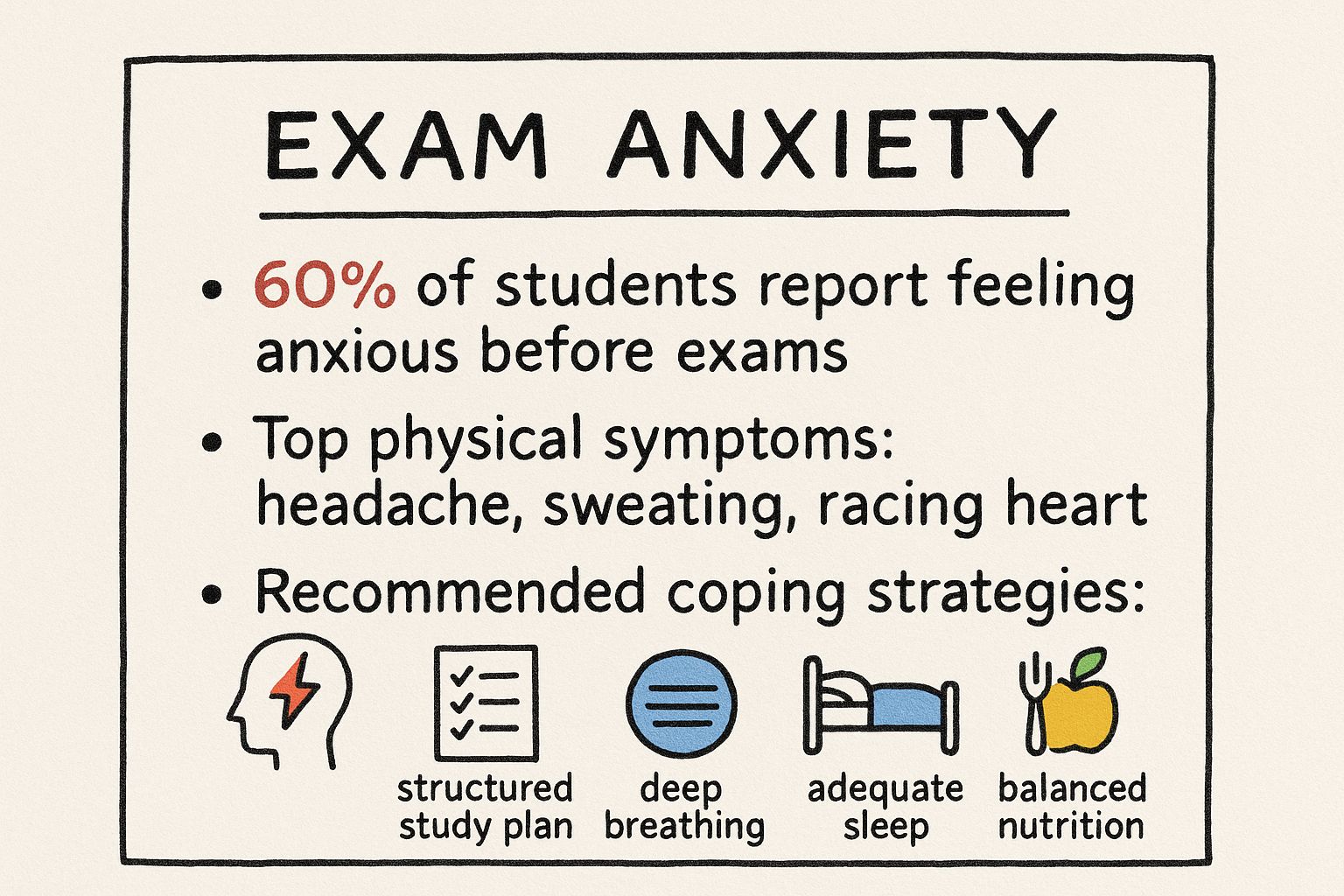
    This visual breakdown offers a clear picture of how widespread this is and points toward the kind of strategies that actually work.

    Image

    The data makes it obvious: a huge number of students are in the same boat. The most effective solutions aren’t about just studying harder; they involve a balanced approach that pairs preparation with genuine self-care. The first step is simply acknowledging that this is a common, solvable problem—not some personal weakness you have to hide.

    The goal isn't to eliminate stress. It's to manage it. Once you accept that anxiety is a natural response to a high-stakes situation, you can stop fighting the feeling and start controlling it.

    To get there, it helps to have a clear roadmap. The strategies in this guide are built on four core pillars. Think of them as the foundation for your new, calmer approach to test-taking.

    Four Pillars of Overcoming Exam Anxiety

    This table gives you a quick overview of the key areas we'll be diving into.

    Strategy Pillar Core Focus Example Action
    Resilient Mindset Shifting your thoughts from fear to confidence. Catching yourself thinking, "I'm going to fail," and replacing it with, "I've prepared for this challenge."
    Strategic Studying Building confidence through effective preparation. Using timed practice exams, like those from AZ-204 Fast, to get used to the pressure.
    In-the-Moment Techniques Regaining control when anxiety spikes. Quietly practicing the 4-7-8 breathing technique right at your desk before starting the exam.
    Lifestyle Adjustments Supporting your mental state through daily habits. Making 7-9 hours of sleep a non-negotiable priority, especially the night before the test.

    By focusing on these four areas, you can build a comprehensive plan that not only gets you through your next exam but also equips you with skills to handle pressure in any part of your life.

    Build a Resilient Mindset for Exam Success

    Image
    Before you even crack open a textbook, the real work begins in your head. Your mindset is the single most powerful tool you have against exam anxiety. It's what determines whether you walk into that exam room primed for performance or crippled by panic.

    Building a resilient mindset is all about learning to control your internal narrative. Think of it as mental armor. It’s not about pretending the pressure doesn't exist, but about learning how to handle it. The first step is simply listening to the stories you tell yourself. Are they full of "I'm going to fail" or "I'm just not smart enough for this"? That's the voice of anxiety, and it's time to talk back.

    Reframe Your Negative Thoughts

    Let's be clear: a negative thought is just a thought, not a prophecy. Once you start catching those automatic negative thoughts in the act, you can start to challenge and replace them. This isn't about blind optimism; it’s a practical technique called cognitive reframing.

    Here’s what that looks like in the real world:

    • When your brain screams: "I'm definitely going to fail this exam."

    • You can counter with: "I've put in the work, and I'm going to focus on doing my best, one question at a time."

    • When you think: "My mind is going to go completely blank."

    • Try this instead: "I've practiced this material. If I get stuck, I'll take a breath, find a question I do know, and build some momentum from there."

    This won't feel natural at first, but with practice, you're literally rewiring your brain's default reaction to stress. You’re shifting your focus from a made-up disaster scenario to the concrete, controllable actions you can take in the moment.

    "Your mind is a powerful thing. When you fill it with positive thoughts, your life will start to change." This isn't just some feel-good quote; it’s the bedrock of building mental resilience.

    And if you feel like you're the only one struggling, you're not. Far from it. The World Health Organization estimates that anxiety disorders affect roughly 4% of the global population, with many people first experiencing symptoms during their school years. Knowing you're not alone can be a huge relief. You can find more complete anxiety statistics to understand just how common this is.

    Visualize Your Success

    Another technique I’ve seen work wonders—and that top athletes swear by—is visualization. This isn't just daydreaming. It's a mental rehearsal where you create a detailed blueprint for success.

    Find a quiet spot, close your eyes, and play a movie in your mind of exam day going exactly how you want it to.

    • Picture yourself waking up, feeling rested and surprisingly calm.
    • See yourself entering the exam room with a quiet confidence. You're prepared.
    • Imagine reading the questions and feeling the answers click into place.
    • Feel that wave of relief and accomplishment as you hand in your finished exam.

    When you run through this mental simulation over and over, you strip the exam of its power to intimidate you. It becomes familiar territory. Your brain starts to accept this positive outcome as a real possibility, dialing down the fear of the unknown that fuels so much anxiety.

    Adopt Study Habits That Reduce Anxiety

    Image
    Let’s be honest: how you prepare for a test has a massive impact on how you feel walking into it. We’ve all been there—procrastinating until the last minute, then trying to cram everything in a frantic, caffeine-fueled haze. That's a surefire recipe for an anxiety meltdown.

    The real secret to walking into an exam feeling confident isn't about studying more; it's about studying smarter. A well-thought-out study routine can transform your prep time from a source of dread into your biggest advantage. Instead of feeling overwhelmed by a mountain of material, a structured plan gives you a clear roadmap, which is the ultimate antidote to anxiety. You're no longer staring at the summit—you're just focused on the next small, manageable step.

    Break Down Your Study Sessions

    The thought of an eight-hour study marathon is enough to make anyone anxious. The good news? It’s also incredibly ineffective. Our brains just aren't wired for that kind of sustained, high-intensity focus.

    A far better strategy is to slice your study time into focused, manageable chunks. This is where a technique like the Pomodoro Method can be a game-changer. It’s simple, but the results are powerful. Here’s the gist:

    • Study hard for 25 minutes. I mean it—zero distractions. Turn off your phone notifications, close those extra browser tabs, and just focus.
    • Take a 5-minute break. Get up, stretch, grab a glass of water, or just stare out the window for a bit.
    • Repeat this cycle four times.
    • Then, take a longer break of 15-30 minutes.

    This approach helps prevent mental burnout and keeps your mind sharp. Each 25-minute block feels like a small win, building momentum and making the entire process feel less intimidating. You're turning a huge task into a series of achievable sprints.

    The best way to conquer that "I'm so overwhelmed" feeling is to break it down. You don't climb a mountain by staring at the peak; you do it by taking one solid step after another. Your study plan should feel the same.

    And remember, your study sessions need to be active, not passive. Simply rereading your notes creates a dangerous illusion of competence. To really know the material, you have to actively engage with it and force your brain to work.

    Test Yourself Before the Test

    One of the most effective ways how to overcome exam anxiety is to prove to yourself, well before the actual test, that you know your stuff. Self-testing is a form of active recall that builds genuine, unshakable confidence.

    Here’s how to make your study sessions more active and effective:

    • Use Flashcards (The Right Way): Don't just passively flip through them. Say the answer out loud before you turn the card over. For complex certifications like the AZ-204 exam, tools like AZ-204 Fast use this exact method with spaced repetition to help the information stick.
    • Explain It to Someone Else: Try teaching a concept to a friend, a family member, or even just your dog. If you can explain it in simple terms, you've truly mastered it.
    • Take Practice Exams: This is non-negotiable. Regularly taking practice tests under timed conditions is the closest you can get to the real thing.

    Simulating the exam experience gets you comfortable with the format and the pressure in a low-stakes environment. You’ll find your weak spots, get a feel for the pacing, and slowly desensitize yourself to the stress. By the time the real test day comes, it'll just feel like another practice run.

    Master In-the-Moment Calming Techniques

    Image

    No matter how well you've prepared, that moment can still hit you. You sit down for the exam, the clock starts, and suddenly a wave of panic crashes over you. Your heart pounds, your palms get sweaty, and your brain feels like it’s filled with fog.

    This is exactly when you need a mental emergency kit—a handful of powerful, discreet techniques you can use to pull yourself back from the edge right then and there.

    These aren't complex, drawn-out exercises. They are quick, practical actions you can do without anyone around you even noticing. The idea is to interrupt that physical and mental spiral before it gains momentum, so you can think clearly and prove what you know.

    Use Your Breath to Control Your Body

    When anxiety spikes, your breathing naturally becomes shallow and quick. This tells your brain there’s a danger, which only makes the anxiety worse. The good news is you can flip this script. By intentionally slowing your breath, you send a direct signal to your nervous system that it's time to calm down.

    One of the most effective and subtle methods I've come across is the 4-7-8 breathing technique. It's perfect to do at your desk right before the exam starts or anytime you hit a question that makes your mind go blank.

    • Quietly inhale through your nose for a mental count of four.
    • Gently hold your breath for a count of seven.
    • Slowly and completely exhale through your mouth (making a soft whoosh sound) for a count of eight.

    Do this cycle just three or four times. That long exhale is the secret sauce; it’s what activates your body's natural relaxation response. It’s an incredibly simple way to lower your heart rate and bring some clarity back almost instantly.

    When you feel anxiety taking over, your breath is your anchor. It’s the one physiological response you have direct and immediate control over, making it the fastest way to break the panic cycle.

    Learning this simple exercise is a fundamental first step in figuring out how to overcome exam anxiety as it’s happening. It gives you a reliable tool to dial down the physical symptoms that so often cause a mental roadblock.

    Ground Yourself with Your Senses

    Anxious thoughts are all about the future—a spiral of "what ifs" that pull you out of the present. Grounding techniques are designed to yank you out of that spiral by forcing you to focus on your physical senses right here, right now.

    The 5-4-3-2-1 method is my go-to for this because you can do it entirely in your head. No one will ever know.

    Silently, just to yourself, identify:

    • 5 things you can see: The clock on the wall, the grain of the wood on the desk, the color of your pen. Be specific.
    • 4 things you can feel: Your feet pressed firmly on the floor, the pressure of the chair on your back, the fabric of your shirt against your skin.
    • 3 things you can hear: The low hum of the air conditioning, someone shuffling their feet, your own quiet breathing.
    • 2 things you can smell: The scent of old paper from the exam booklet or maybe the faint smell of the room's cleaner.
    • 1 thing you can taste: The lingering taste of your morning coffee or just the neutral taste in your mouth.

    This sensory inventory doesn't leave any room for worry. It forces your brain to engage with the tangible world around you. Think of it as a mental reset button that can stop panic in its tracks, giving you the focus you need to get back to the exam, one question at a time.

    Adjust Your Lifestyle for a Calmer Brain

    https://www.youtube.com/embed/Quw6URDE_Oo

    Your ability to manage anxiety isn't just about what you do in the moments before a test. It's deeply connected to your daily habits. Think of it this way: your brain and nervous system need stability to perform under pressure, and simple lifestyle adjustments can provide exactly that.

    It's a lot like prepping a race car for a big event. You wouldn't just focus on the driver's skills; you’d make sure the engine has the right fuel and is perfectly maintained. Your body is no different. The food you eat, the sleep you get, and how much you move all directly impact your mental resilience when it counts.

    Prioritize Restorative Sleep

    When a big exam is looming, what's the first thing we usually sacrifice? Sleep. Pulling an all-nighter to cram feels like a necessary evil, but it’s one of the worst things you can do for exam anxiety. A sleep-deprived brain is an anxious brain, plain and simple. It cripples your cognitive function, sends your emotions into overdrive, and destroys your ability to recall information.

    Instead of fighting your body's fundamental need for rest, build sleep into your study plan as a non-negotiable priority.

    • Aim for 7-9 hours per night. This isn't just a suggestion; it's the gold standard for adults. This is when memory consolidation happens—the crucial process where your brain actually files away everything you've studied.
    • Create a wind-down routine. About an hour before you plan to sleep, put the books and screens away. Signal to your brain that it's time to power down. Try reading a novel, listening to calm music, or doing some light stretching.
    • Watch the late-day caffeine. That afternoon coffee might feel essential, but it can disrupt your sleep cycle for hours, even if you don't feel "wired" before bed.

    Think of consistent, quality sleep as your secret weapon. It calms your nervous system and ensures all that hard work you're putting in actually sticks.

    Sacrificing sleep to study more is like draining your phone battery to read an article about how to save battery life. It’s completely counterproductive. A well-rested mind is a focused, resilient mind.

    Fuel Your Brain Intelligently

    The connection between your gut and your brain is incredibly powerful. The foods you eat can either help regulate your mood or send it on a wild rollercoaster. While there's no magic food that will cure anxiety, a balanced diet builds the foundation for a stable mental state.

    When you're stressed, it’s so easy to reach for sugary snacks or another cup of coffee for a quick energy jolt. The problem is, these choices almost always lead to a sharp crash, which only amplifies feelings of anxiety and jitters. Instead, try to focus on brain-friendly foods that give you sustained energy.

    • Complex Carbohydrates: Think oatmeal, brown rice, and whole-grain bread. They release glucose slowly, providing a steady stream of fuel for your brain.
    • Lean Proteins: Foods like turkey, eggs, and beans contain the amino acids your brain needs to produce mood-regulating neurotransmitters.
    • Omega-3 Fatty Acids: You'll find these in fatty fish like salmon, as well as in walnuts and flaxseeds. They are absolutely essential for overall brain health and function.

    Move Your Body to Clear Your Mind

    You don't need to train for a marathon to get the mental benefits of exercise. Even short, simple bursts of physical activity are amazing at reducing stress hormones like cortisol and releasing endorphins—your body’s natural mood elevators.

    If you feel that familiar knot of anxiety tightening while you're studying, one of the best things you can do is step away and move. A brisk 20-minute walk can be enough to completely reset your mental state, sharpen your focus, and make your next study block way more productive. Making these small, sustainable lifestyle changes is one of the most powerful things you can do when learning how to overcome exam anxiety.

    Answering Your Lingering Questions About Exam Anxiety

    Even with a solid game plan, you might still have some specific worries rattling around in your head. Getting straight, honest answers to these questions is a big part of feeling in control. Let's tackle some of the most common concerns I hear from students.

    Is It Really Possible to Get Rid of Exam Anxiety Completely?

    Honestly? No, and you wouldn't want to. A little bit of stress is actually a good thing—it's what sharpens your focus and gives you that performance edge. The real goal isn't to erase every last butterfly from your stomach, but to dial the anxiety down from a roar to a hum.

    Think about a professional athlete before a championship game. They aren't totally zen; they have that nervous energy, and they channel it. That's what we're aiming for here. The strategies in this guide are designed to keep anxiety from derailing you, so you can turn that energy into fuel for success.

    How Can I Help a Friend Who's Really Struggling with Exam Anxiety?

    It's tough watching a friend go through this. The most powerful thing you can do at first is simply listen without trying to "fix" it. Just giving them a space to vent can lift a massive weight off their shoulders. You could also gently suggest trying a simple technique together, like going for a quick walk to reset or doing a breathing exercise you learned here.

    But it's just as important to know where your role ends.

    Remember, you're their friend, not their therapist. If their anxiety seems severe—we're talking frequent panic attacks, skipping school to avoid tests, or constant distress—the best support you can offer is to gently encourage them to talk to a school counselor or a mental health professional.

    What Do I Do If My Mind Goes Completely Blank During the Test?

    This is a classic fear, but here's the good news: it's almost always a temporary freeze, not a total memory failure. When this happens, the absolute worst thing to do is panic, because that just feeds the anxiety loop.

    Instead, just stop. Put your pen down. Take a few deliberate, deep breaths to tell your nervous system it's okay. Try the 5-4-3-2-1 grounding technique we talked about earlier. Then, scan the test for a question you know you can answer—the easiest one you can find. Answering it, even out of order, creates a small victory. That little bit of momentum is often all it takes to break the mental dam and get things flowing again.

    When Is It Time to Get Professional Help?

    Self-help strategies are fantastic, but sometimes they aren't enough. It's time to consider reaching out for professional support if your anxiety feels like it's taking over.

    Look out for these signs:

    • It's Constant: The dread isn't just on exam day; it's a persistent feeling that follows you around.
    • It's Physical: You're dealing with regular headaches, stomach issues, or even panic attacks.
    • It's Leading to Avoidance: You start skipping classes or putting off studying altogether just to avoid the feeling.

    If any of that sounds familiar, talking to a counselor or therapist isn't a sign of failure—it's a sign of strength. They have specialized tools, like cognitive-behavioral therapy (CBT), that are incredibly effective for this exact issue.


    When you're gearing up for a tough technical certification like the AZ-204, confidence is half the battle. AZ-204 Fast is designed to build that confidence from the ground up, using interactive flashcards and true-to-life practice exams to ensure you don't just memorize facts, but actually understand them. Conquer your certification with confidence at az204fast.com.

    Article created using Outrank
  • MeasureUp Practice Tests an In-Depth Comparison

    MeasureUp Practice Tests an In-Depth Comparison

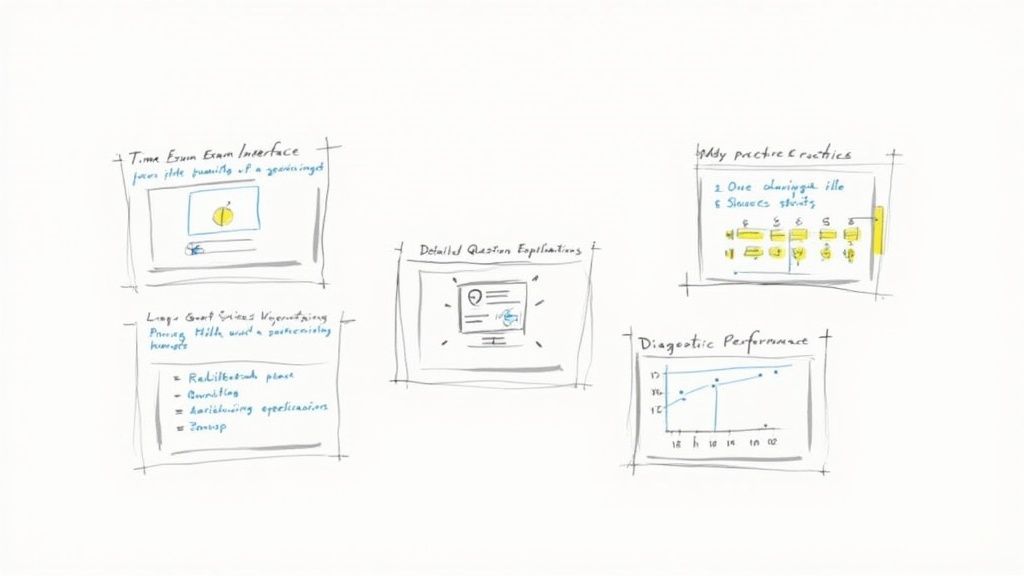
    When you're trying to pick a prep tool for your next IT certification, the biggest difference between a platform like MeasureUp and a specialized one like AZ-204 Fast really boils down to scope. MeasureUp offers a gigantic catalog for all sorts of career paths and vendors. On the flip side, focused tools give you an incredibly deep, concentrated prep for just one exam. The right choice for you depends entirely on whether you need a broad toolkit for the long haul or a precision instrument for a specific job right now.

    Choosing Your Path to Certification Success

    Trying to find the right study materials can feel like deciding between a massive public library and a highly detailed instruction manual for a single piece of equipment. On one hand, you have trusted, established names like MeasureUp, a global leader that's been a fixture in the IT training world for decades.

    On the other, you'll find laser-focused platforms built from the ground up to help you master one specific exam, such as AZ-204 Fast. Getting a handle on their core philosophies is the first step to picking the tool that actually fits your career goals and how you like to study.

    At a Glance Comparison MeasureUp vs Specialized Prep

    To really frame this decision, let's start with a high-level look at what makes each platform tick. Think of MeasureUp as being built for breadth—it's perfect for individuals and companies who need one place to find study materials for a ton of certifications from vendors like Microsoft, CompTIA, and Cisco. A specialized platform, however, pours all of its energy and resources into mastering a single certification's curriculum.

    This table breaks down the fundamental differences.

    Feature MeasureUp Practice Tests AZ-204 Fast (Example)
    Primary Focus A broad catalog covering many vendors and certifications. Deep preparation for one specific exam (e.g., AZ-204).
    Ideal User Professionals going after multiple certs or corporate training managers. Individuals targeting a single certification on a tight schedule.
    Content Scope Huge question banks designed for general exam simulation. Highly targeted content, often including flashcards and cheat sheets.
    Learning Model Mostly practice test simulation offered in various modes. Mixed-methodology learning, like spaced repetition and active recall.

    Ultimately, both approaches aim to get you certified, but they take very different roads to get there.

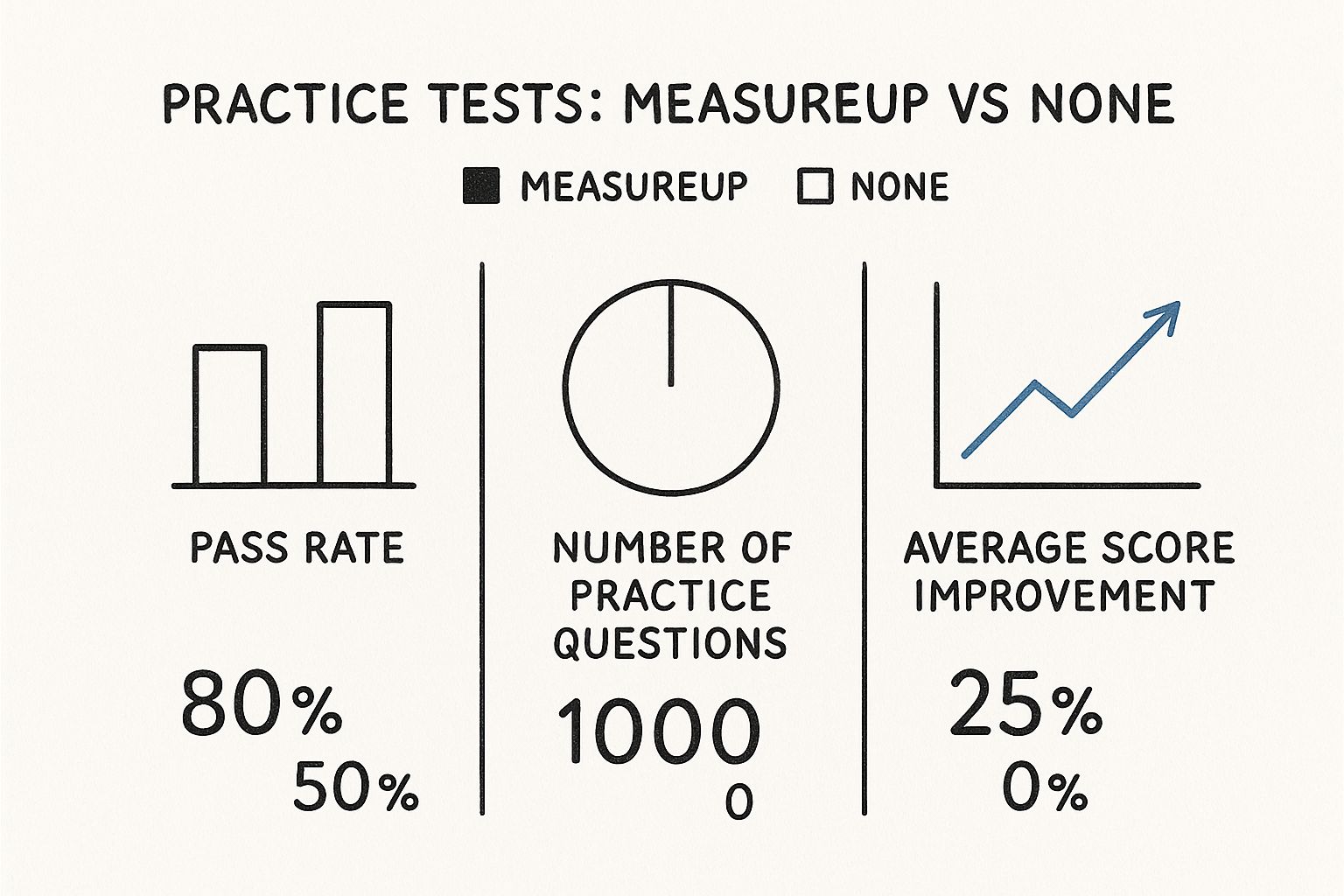
    This visual really drives home the point of how much practice tests can impact your final score.

    Image

    The data speaks for itself. Getting into a structured practice environment gives you a serious leg up, boosting both your score and your chances of passing on the first try.

    Understanding the Key Players

    MeasureUp has been around the block, and its longevity in the IT training world is proof of its sheer scale. After its 25th anniversary, the company shared that it sold over 1.2 million tests in 2021 alone, reaching people in 130 countries. Their library is massive, with over 400 titles and more than 33,000 questions.

    That kind of extensive library makes it the default choice for anyone who values variety and plans on collecting multiple certifications over their career. It’s the Swiss Army knife of exam prep.

    In stark contrast, specialized tools are all about depth, not breadth. Their value isn’t in how many exams they cover, but in how exceptionally well they prepare you for one. This guide will help you weigh whether the broad or deep approach is the right fit for what you need to accomplish next.

    If you want more general advice on the certification journey itself, check out our guide on how to get Microsoft certified.

    How Question Quality Shapes Your Exam Readiness

    At the heart of any good practice test is the quality of its questions. It's the make-or-break factor. If you're studying with questions that don't mirror the real exam, you're not just wasting time—you're building a false sense of confidence that can fall apart on test day. This is where the fundamental differences between a big, established platform and a laser-focused tool really show.

    When you fire up a MeasureUp practice test, you're getting access to a huge, professionally vetted question bank. These aren't just random questions; they are engineered from the ground up to mimic the official exam's format, tone, and difficulty level. They’re designed to cover the entire spectrum of exam objectives, leaving no room for ugly surprises.

    The real value here is their structured authenticity. MeasureUp has a close relationship with certification bodies, lending their content an authority that's tough to find elsewhere. You'll often see complex, scenario-based questions that force you to think like an IT pro solving a real problem, not just someone trying to pass a test.

    The MeasureUp Philosophy: Rigorous Simulation

    MeasureUp’s strength lies in its formal, almost scientific, development process. Each question is written, reviewed, and tested to ensure it aligns perfectly with the official curriculum. The result is a polished, reliable experience that feels incredibly close to sitting for the actual exam.

    For instance, a typical question might lay out a complex business challenge and then offer several plausible solutions. Your job isn't just to spot the correct one but to truly understand why the others fall short. This process is fantastic for building the critical thinking skills you absolutely need for tough certification exams.

    One of their biggest differentiators is the inclusion of performance-based or lab-style questions. These aren't your standard multiple-choice. They drop you into a simulated environment and ask you to actually perform tasks, directly testing your hands-on skills. For many modern IT certifications, this kind of practical validation is crucial.

    The Specialized Tool: A Different Game

    Now, let's look at the alternative. A specialized tool like AZ-204 Fast comes at question design from a completely different angle. The goal isn't just to simulate the exam; it's to force a deep, lasting understanding of specific, and often tricky, concepts. The questions become a tool for learning, not just for assessment.

    You'll find that questions on a platform like this are often more direct, targeting the exact spots where candidates tend to stumble. They are deliberately crafted to break down complex topics into smaller, more manageable pieces. You might get a question designed specifically to trip you up on the subtle differences between two similar Azure services, forcing you to master the nuance.

    The core difference is this: MeasureUp tests what you know in a format that mirrors the exam, while a specialized tool uses questions to actively build and reinforce your knowledge from the ground up.

    This leads to a different kind of preparation. MeasureUp gets you comfortable with the pressure and format of the test-taking experience itself. A focused tool, on the other hand, builds your foundational knowledge so solidly that you can tackle any question on a topic, no matter how it’s phrased.

    Authenticity vs. Focused Learning: A Breakdown

    So, which path is right for you? It really comes down to where you are in your study journey.

    Comparison Aspect MeasureUp Practice Tests AZ-204 Fast (Example)
    Question Goal Simulate the official exam experience and format. Build and test deep conceptual understanding.
    Scenario Complexity High, often mirroring real-world, multi-step problems. Targeted, focusing on specific, common points of confusion.
    Explanations Detailed breakdowns of why each option is right or wrong. Concise, direct explanations linked to core concepts.
    Best For Gauging final exam readiness and getting used to the test format. Solidifying foundational knowledge and closing specific gaps.

    For a lot of people, the answer isn't one or the other—it's both. A hybrid approach is often the most effective. You can use a specialized tool in the early and middle stages of your prep to build that rock-solid knowledge base. Then, in the final weeks, switch to MeasureUp practice tests to get battle-tested for the real thing.

    MeasureUp's reputation for quality is backed by hard numbers. An incredible 98.9% of users confirm the question affinity with official exams, and 91% are satisfied with the detailed explanations they receive. It’s clear why their users trust them to deliver an authentic exam simulation. You can dig into their satisfaction metrics and see why 84.6% of users recommend MeasureUp.

    Comparing Different Learning Methodologies

    Image

    Knowing the right answers is one thing, but how you get there is what truly matters for exam success. The learning methodology a platform uses can make or break your ability to retain information and perform when the pressure is on. This is where you'll find a major philosophical difference between a broad-spectrum tool like MeasureUp practice tests and a focused platform like AZ-204 Fast.

    MeasureUp's entire approach is built on a structured, dual-mode system. It’s designed to guide you through two very distinct phases of prep, letting you control how you tackle the material based on your confidence and study goals. This flexibility is really the heart of their platform.

    The MeasureUp Dual-Mode System

    The two modes in MeasureUp create a clear path from learning the material to validating your skills. Each one has a specific job to do, moving you from a relaxed practice session to a high-stakes exam simulation.

    • Practice Mode: Think of this as your personal study sandbox. You can work through questions without a clock ticking down, getting instant feedback with detailed explanations and official documentation links right after you answer. It's built for active learning, letting you stop, think, and really dig into why an answer is correct before moving on.

    • Certification Mode: This is the dress rehearsal for the real deal. It mimics the actual exam environment down to the timer and the lack of immediate feedback. You have to finish the whole test before you see your results, forcing you to manage your time and stay cool under pressure, just like on exam day.

    This clean separation lets you build your knowledge base piece by piece in Practice Mode and then test its strength under fire in Certification Mode. It's a systematic process that works well for anyone who likes a clear line between studying and testing.

    The Specialized Tool Methodology

    On the other hand, a specialized tool like AZ-204 Fast weaves learning and testing together into a more fluid, ongoing process. The focus isn't on separate modes but on using targeted drills and active recall to make the information stick.

    Instead of sitting down for a long practice exam, you might run through rapid-fire quizzes that hammer a single exam objective. This method is often built on learning principles like spaced repetition, where concepts you find tricky show up more frequently. The goal isn't just to see what you know, but to actively train your brain to pull up the right information when needed.

    The core difference is intent. MeasureUp separates learning from assessment. A specialized tool often merges them, using the assessment itself as the learning mechanism to drive retention and pinpoint weaknesses on the fly.

    This approach is fantastic for learners who need to build a solid foundation from the ground up. It breaks massive topics into bite-sized chunks and reinforces them with constant, focused practice. You aren't just studying for the exam; you're actively rewiring your memory for better long-term recall.

    Which Learning Style Fits You?

    So, which one is better? It honestly comes down to your personal learning style and where you are in your study plan. There's no single right answer—the best approach is the one that clicks with how you learn.

    Think about these common scenarios:

    • You need to see if you're ready. You've done the coursework and feel pretty confident, but you want a final check. MeasureUp’s Certification Mode is tailor-made for this, giving you the most realistic simulation of the exam experience.
    • You learn by taking things apart. You’re the type who likes to dissect each question, explore the "why," and read the documentation. MeasureUp's Practice Mode is the perfect environment for this methodical deep dive.
    • You're starting from scratch. Big practice tests feel intimidating right now. A specialized tool's targeted, topic-specific drills can help you build that foundational knowledge without feeling overwhelmed.
    • You struggle to remember things. You study a topic one week and it's gone the next. The spaced repetition algorithms built into platforms like AZ-204 Fast are designed specifically to fight that "forgetting curve."

    In my experience, the most prepared candidates often blend these strategies. They might use a specialized tool to build and cement their knowledge of the core concepts, then switch to MeasureUp practice tests in the final weeks to master their pacing and get comfortable with the official exam format.

    Using Analytics to Guide Your Study Strategy

    Image

    Answering a mountain of practice questions is one thing, but knowing what to do with the results is what truly separates passing from failing. Good data turns aimless review sessions into a targeted mission. This is where the analytics engines of both MeasureUp practice tests and focused tools like AZ-204 Fast really show their different philosophies.

    A strong analytics dashboard is more than a scoreboard. It should be your personal study coach, pointing out exactly where you’re going wrong and what your next move should be. It’s all about turning raw performance data into a concrete, adaptive plan.

    MeasureUp's Comprehensive Reporting Dashboard

    MeasureUp has built a robust and detailed reporting system that gives you a bird's-eye view of your performance. Once you complete a test, you get a dashboard that neatly breaks down your results against the official exam objectives. This is incredibly valuable for surgically pinpointing your weak areas.

    For example, if you keep stumbling on questions tied to a specific exam domain like "Implement Azure Security," the dashboard makes that weakness impossible to miss. This tells you to go back to your main study materials and focus your energy right there, instead of wasting time re-reading topics you already know cold. The analytics are designed to push you toward a balanced understanding of everything on the exam.

    MeasureUp’s analytics are fundamentally about readiness assessment. The reports essentially tell you, "You are currently weak in these specific areas," so you can patch those knowledge gaps before the real exam.

    The platform also tracks your progress over time. Seeing your scores climb with each practice test is a fantastic confidence booster and confirms you're on the right track as your exam date gets closer.

    Analytics in Specialized Tools

    Specialized platforms like AZ-204 Fast come at analytics from a completely different angle. Rather than focusing on a big report at the end, they weave feedback directly into the learning experience itself. The goal isn't so much a final "pass/fail" score on a practice run, but continuous, real-time improvement.

    In a tool like this, the analytics track your performance on individual concepts, sometimes down to a single flashcard. If you consistently struggle with a particular Azure service, the system’s algorithm will start showing you that topic more often. This data-driven approach, often based on spaced repetition, dynamically adjusts your study plan as you go.

    Analytics and Feedback Feature Breakdown

    To really see the difference, let’s put their analytical approaches side-by-side. The table below breaks down how each platform handles performance tracking and reporting.

    Analytics Feature MeasureUp Practice Tests AZ-204 Fast (Example)
    Primary Goal Assess overall exam readiness and identify weak objectives. Drive knowledge retention through continuous, targeted feedback.
    Feedback Timing Primarily after completing a full practice or certification test. Real-time and continuous, adjusting as you study.
    Reporting Focus Performance broken down by official exam domains and objectives. Mastery level on individual concepts, topics, and flashcards.
    Actionable Insight "Go study this exam objective more." "You're struggling with this concept; let's review it again."

    Ultimately, your choice boils down to the kind of feedback you find most helpful.

    If you want a clear, high-level picture of your exam readiness, the comprehensive reports from MeasureUp practice tests are perfect. They give you the "what" and "where" of your weaknesses.

    But if you need a system that actively helps you fix those weaknesses with targeted, adaptive drills, the real-time analytics of a specialized tool might be a better fit. It provides the "how" by building the feedback loop directly into your study flow, ensuring you don’t just find your weak spots—you actually strengthen them.

    Situational Recommendations for Your Career Goals

    Image

    When it comes to practice tests, there's no single "best" platform. The right choice really hinges on where you are right now in your career and where you're headed. Picking the right tool is a strategic decision that can save you a ton of time and money, so it’s worth thinking about more than just a simple feature list.

    Let's move beyond a generic pro-and-con rundown and dive into some practical, real-world situations. This should help you figure out if the broad-spectrum approach of MeasureUp practice tests is a better fit, or if the laser-focused intensity of a tool like AZ-204 Fast is the smarter play for you.

    When MeasureUp Is Your Best Bet

    With its huge catalog, MeasureUp is an absolute powerhouse for certain professionals. If any of these scenarios sound familiar, it’s probably your best bet.

    • You're on a Multi-Certification Journey: Planning to collect certifications from different vendors like Microsoft, CompTIA, and Cisco? MeasureUp makes this so much easier. You get a single, consistent platform instead of having to learn a new prep tool for every exam you tackle. It’s a huge time-saver.

    • You're a Training Manager Equipping a Team: If you’re responsible for getting an entire team certified, MeasureUp is built for that. Their Team Plans are designed for bulk purchases, making it cost-effective for whole departments or training academies. You can tell this is a priority for them, given their focus on growing in corporate training markets.

    • You Need the "Official" Stamp of Approval: As a Microsoft Official Practice Test provider, the MeasureUp name carries some serious weight. If your company prefers or even requires officially sanctioned study materials, this is the safest and most direct path to follow. No questions asked.

    • Your Foundation is Solid, but You Need Exam Simulation: Let's say you've already done the coursework and feel pretty confident with the material. What you really need now is to get a feel for the real exam—the pressure, the timing, and the question formats. MeasureUp’s Certification Mode is perfectly built for this final-stage validation.

    MeasureUp really shines when breadth, official recognition, and training at scale are your top priorities. It's the go-to for anyone building a versatile, long-term certification toolkit.

    When a Specialized Tool Makes More Sense

    On the flip side, there are times when MeasureUp's massive scope is simply overkill. In these cases, a highly focused tool offers a much more direct and efficient route to passing your exam.

    This is where a platform like AZ-204 Fast comes into play. Consider it if you find yourself in one of these spots:

    • You're Targeting a Single, High-Stakes Exam: Your entire world revolves around passing one specific test, like the AZ-204. A specialized tool pours all its energy into that one exam, which often means you get deeper insights, more targeted drills, and handy learning aids like cheat sheets that a general-purpose platform just can't offer.

    • You're Short on Time: Got just a few weeks to prepare? You need the most efficient study method you can find, period. Specialized tools that use methods like spaced repetition are designed to cram knowledge into your brain and make it stick, cutting out all the fluff you don't have time for.

    • You Struggle with Specific Knowledge Gaps: We've all been there. You've studied the material, but certain concepts just refuse to sink in. A focused tool can dynamically identify those weak spots and keep drilling you on them until they become second nature. It's a much more fluid process than just re-reading a static report of your wrong answers.

    Ultimately, the decision boils down to what you need to accomplish right now. Are you building a broad library of professional skills, or are you trying to master one critical exam? Your answer will point you directly to the right tool for the job.

    Your Questions About MeasureUp, Answered

    Even after comparing the two, you probably still have some lingering questions about MeasureUp. Let's tackle some of the most common ones I hear from developers, so you can decide with confidence if it's the right fit for your study plan.

    A big one is always about the difficulty. People often say MeasureUp questions feel tougher than the actual exam, and they're right. That’s by design. The idea is to over-prepare you. By wrestling with these harder questions, the real exam feels less intimidating and much more manageable when you finally sit for it.

    How to Fit MeasureUp Into Your Study Routine

    So, how do you actually use MeasureUp with everything else you're doing? Think of it less as your primary learning tool and more as a final validation step. It shouldn't be your only resource.

    Here’s a workflow that works well:

    1. First, learn the material: Dive into the official Microsoft Learn documentation, watch video courses, and, most importantly, get your hands dirty with real labs.
    2. Then, diagnose your weaknesses: Once you feel you've got a decent handle on the topics, jump into MeasureUp's Practice Mode. This is where you’ll uncover the areas you thought you knew but are actually a bit shaky on.
    3. Finally, simulate the real deal: In the last week or two before your exam, switch over to Certification Mode. This is your dress rehearsal. It gets you used to the clock ticking down and builds the confidence you need to walk in on exam day.

    The key is to view practice tests as a diagnostic and simulation tool. They show you where to focus your learning efforts and get you comfortable with the exam format, but they don't replace the foundational learning process.

    This approach ensures you’re truly understanding the concepts, not just memorizing answers.

    Do MeasureUp Practice Tests Guarantee a Pass?

    This is the million-dollar question. While MeasureUp is an official Microsoft partner and their simulations are top-notch, no practice test can guarantee you'll pass. Ultimately, your success comes down to your own effort and how well you can apply what you've learned under pressure.

    That said, consistently scoring high on these tests is a very strong signal that you're ready.

    MeasureUp's track record speaks for itself. They have a massive presence in the certification space, helping over half a million people get certified in 2023 alone by delivering more than one million tests. With a catalog of over 400 products and 30,000 questions, they have deep expertise in this area. You can read more about their impact on professional careers on their blog.

    Using their tests correctly will absolutely boost your chances, but you still have to put in the work to cross the finish line.


    Ready to conquer the AZ-204 exam with a focused, efficient approach? AZ-204 Fast combines spaced repetition, targeted practice questions, and concise cheat sheets to help you pass in weeks, not months. Start your journey to certification success with AZ-204 Fast today!

    Article created using Outrank